A publication of Countryman Press, W. W. Norton & Company, 2018

Ancient Skies is available from booksellers worldwide, and at: Amazon.com, BarnesandNoble.com, WWNorton.com, etc. in these formats: hardback, e-book, audiobook, and audio CD.
Book illustrations appear at the bottom of this page.
***************************
LOOK TO THE SKY AND SEE THE STORIES IN THE STARS
This non-fiction narrative presents the tales of the forty-eight classical constellations, compiled from literature that spans nine centuries from Homer (c. 750 BC) to Claudius Ptolemy (c. 150 AD). These age-old tales have captured the human imagination from ancient times to the present. They provide an excellent compendium of Greek mythology, as well as a close look at early practical astronomy, philosophical speculation on the cosmos, and fundamental moral beliefs.
The narrative is accompanied by an illustrated guide—a series of star charts carefully reconstructed from ancient sources. These allow the modern reader to detect the constellation patterns in the stars in the same manner that early observers saw them. The stars and constellations are among the few remaining objects that appear to us just as they appeared to our distant ancestors. From anywhere on Earth, a person may view the same celestial panorama simply by stepping outside at night and gazing upward. The charts and tales in Ancient Skies help the reader to see the constellations in the manner of the Greeks and to hear the timeless stories they portray.
Ancient Skies explores a subject that appeals to audiences around the world and has attracted a wide readership for three millennia—from the emergence of the earliest western literature to the most recent best-selling books and movies. The author’s comprehensive research led him to archives and museums across North America and Europe, and to historical and archaeological sites in Greece at Athens, Marathon, Delphi, Mycenae, Olympia, Ithaca, Crete, and dozens of other locations. To produce the star charts, he made observations of all eighty-eight constellations—ancient and modern—from positions around the globe.
***************************
REVIEWS
“An excellent explanation of the constellations and their relationship to Greek mythology. The 48 classical constellations from Ptolemy’s Almagest are discussed. They are broken into subject areas, such as stories related to Ovid’s Metamorphoses, Perseus, Heracles, the Argonauts, etc. Nautical navigational knowledge and lore is also covered, as is agricultural and nature knowledge derived from the constellations perennial positions. A must for those interested in both mythology and astronomy/astrology alike.”
“ Ancient Skies details the impact the night sky had on Greek mythology. Which, for the record, would have been massive. Not only do we get the myths behind some of the most famous constellations, but Marshall also provides reconstructed star charts and illustrations. Fans of astronomy and classical mythology are sure to enjoy this insightful view into the lives and beliefs of ancient Greeks.”
“Thorough and Informative Reference. This book and H.A. Rey’s “The Stars” will be powerful for any parent, grandparent or child that wants to learn the constellations and be able to navigate the night sky. Ancient Skies covers the tales behind the mythological beings in the night sky and helps you better approximate where each is because their other story members are close by! There is a method to the madness – they are arranged logically by storyline! The author has excellent references for an ancient farmer, shepherd, vintner and sailor’s almanac. Weather patterns, how animals/birds/dolphins react before a storm. Another appendix is helpful for memorizing the Greek, Latin and Modern names.”
“I really enjoyed this book. It told the myths and stories but it also told how these stories impacted regular people. It was also very informative in how the constellations were used by people in measuring time frames. It was a fascinating read and requires no knowledge of the stars to understand. I would recommend this book.”
“This was an informative and interesting read, especially for my first read of 2020. The narration was also very well done, and I learned so many new points of Greek mythology.”
“Great Read. A great collection of Cosmic Mythology relating to the Stars with an excellent range of details, images, and source material.
***************************
ANCIENT SKIES BOOK ILLUSTRATIONS
The images that follow appear in three categories: Book Images by Chapter Number, Additional Images by Related Chapter Number, and Celestial Atlas by Alexander Jamieson, 1822. The book images have captions that begin with the chapter number, e.g. “Chapter 1a.” Images in addition to those found in the book have captions that begin with, e.g. “Chapter 1a1.”
If you wish to copy and use an image or images, you must cite the following source: http://www.davidwestonmarshall.com/ancient-skies/
For more related images on this website, see: RESEARCH & PUBLICATIONS/At Home in Hellas, COLLECTIONS/Ancient Mediterranean Collection, and COLLECTIONS/Portable Water and Food Ware Collection.
BOOK IMAGES BY CHAPTER NUMBER
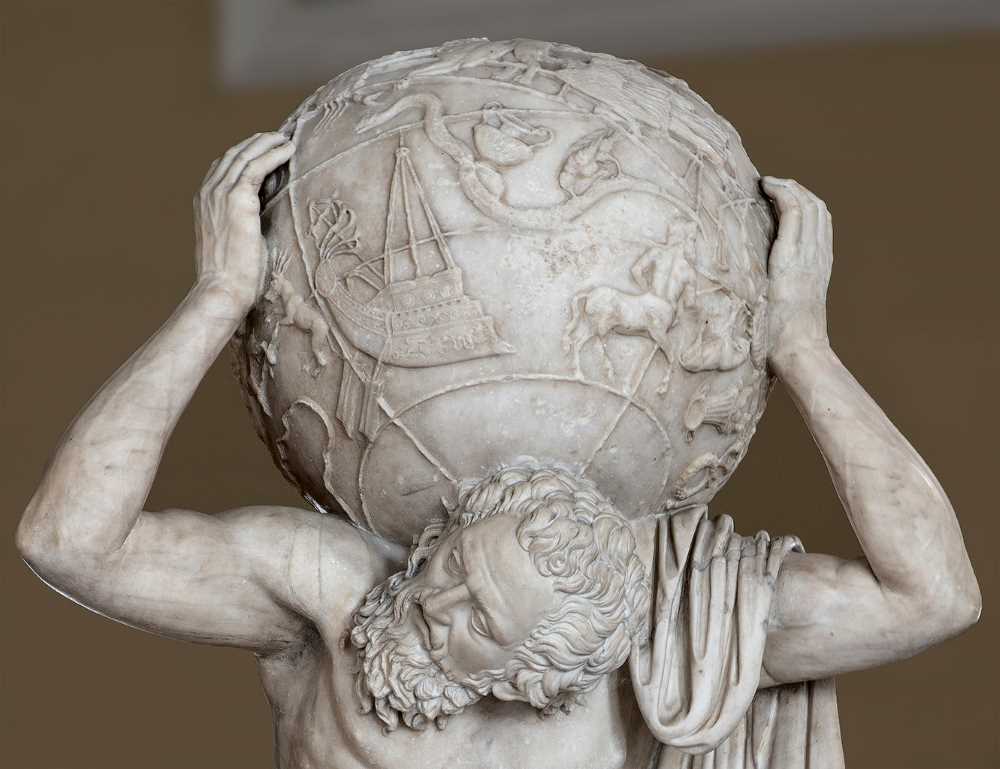
INTRO 1a. Farnese Atlas celestial globe, copy of an original Greek sculpture of the third century BC. National Archeological Museum, Naples, Italy.
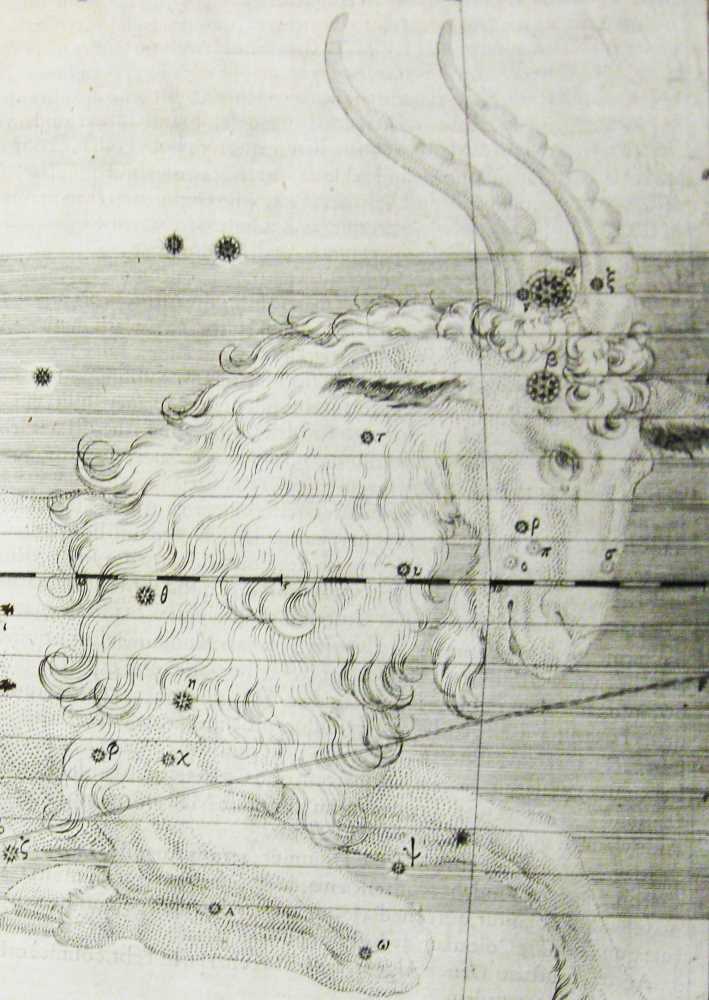
PART 1a. Capricornus (Goat Horn). Uranometria by Johann Bayer, 1603. Museum of History and Science Library, Oxford University. Photo by author.
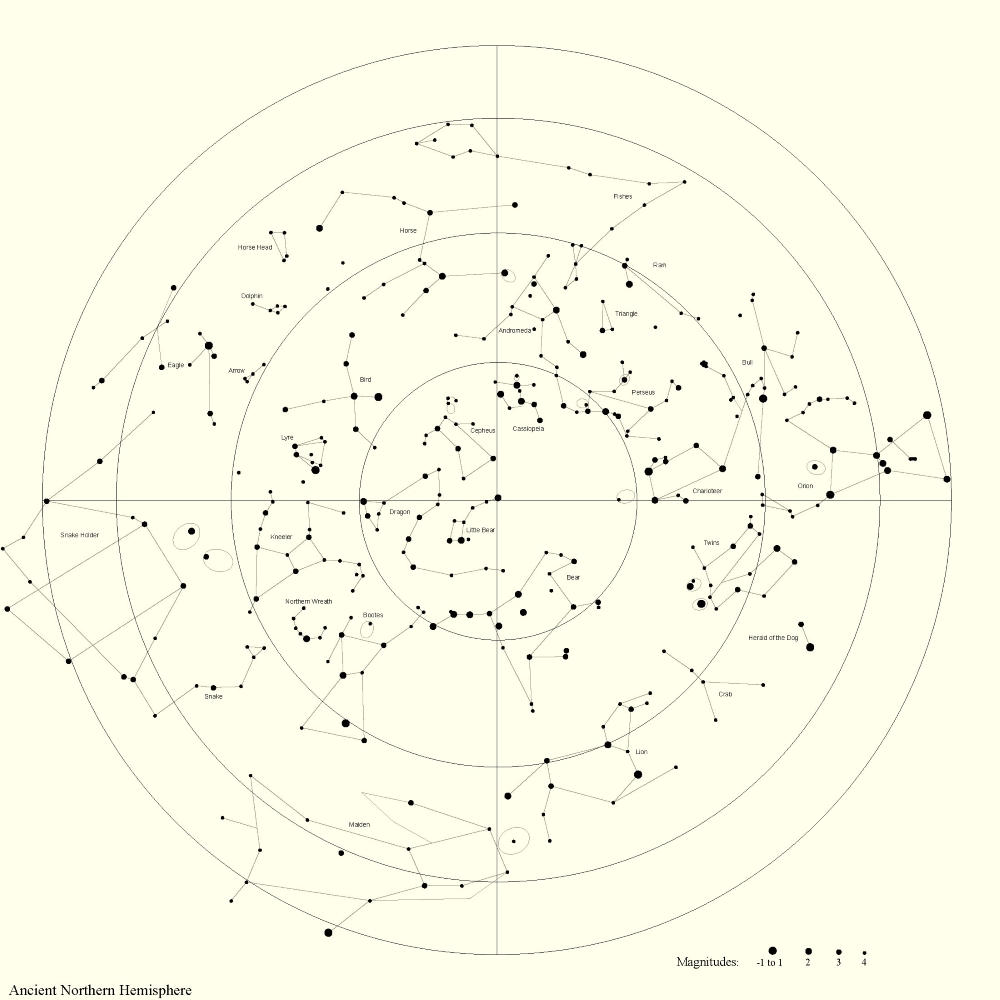
PART 1b. Northern Hemisphere Chart of Ancient Constellations.
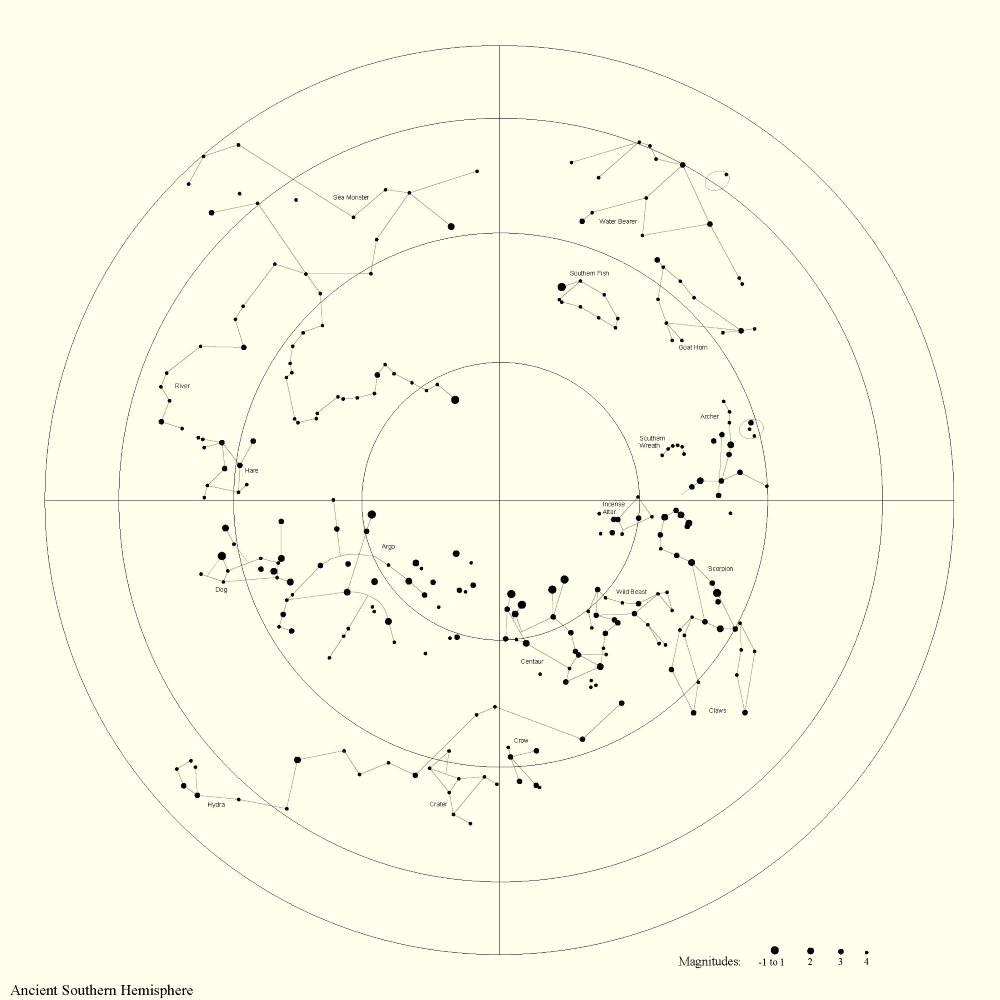
PART 1c. Southern Hemisphere Chart of Ancient Constellations.
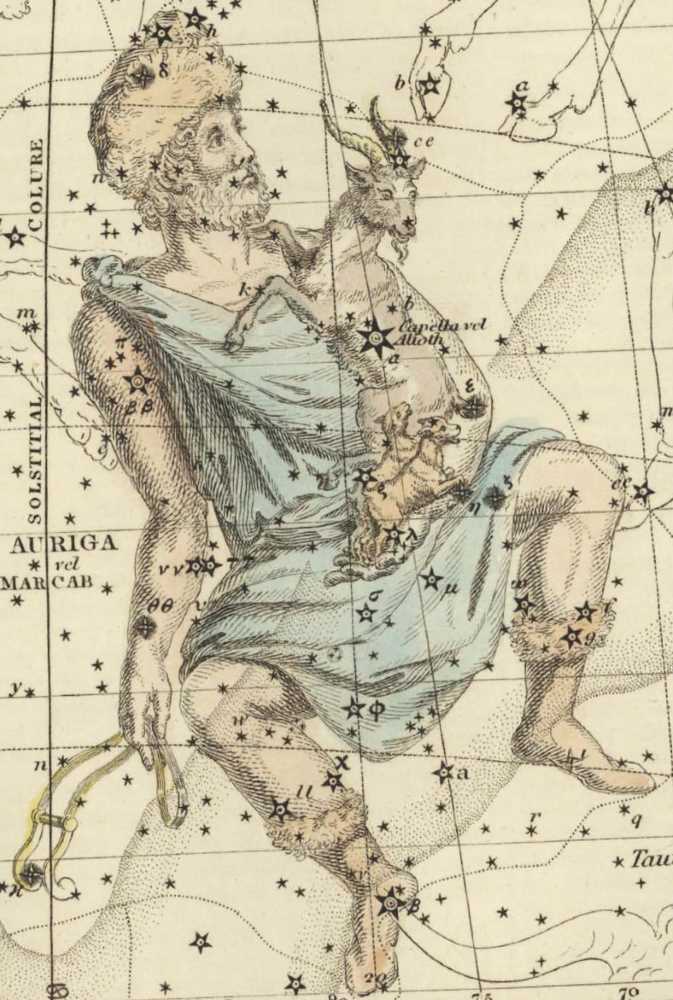
Chapter 1a. Auriga (Charioteer). Celestial Atlas by Alexander Jamieson, 1822.
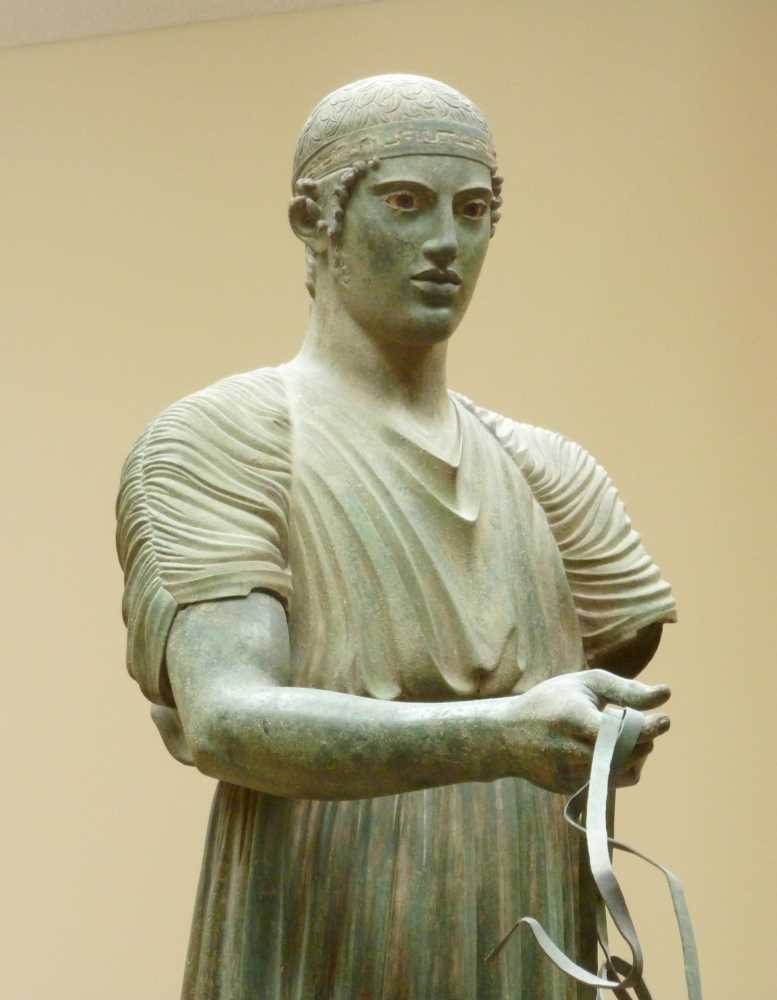
Chapter 1b. Auriga (Charioteer). Charioteer at Delphi. Bronze sculpture c. 470 BC. Archeological Museum, Delphi, Greece. Photo by author.
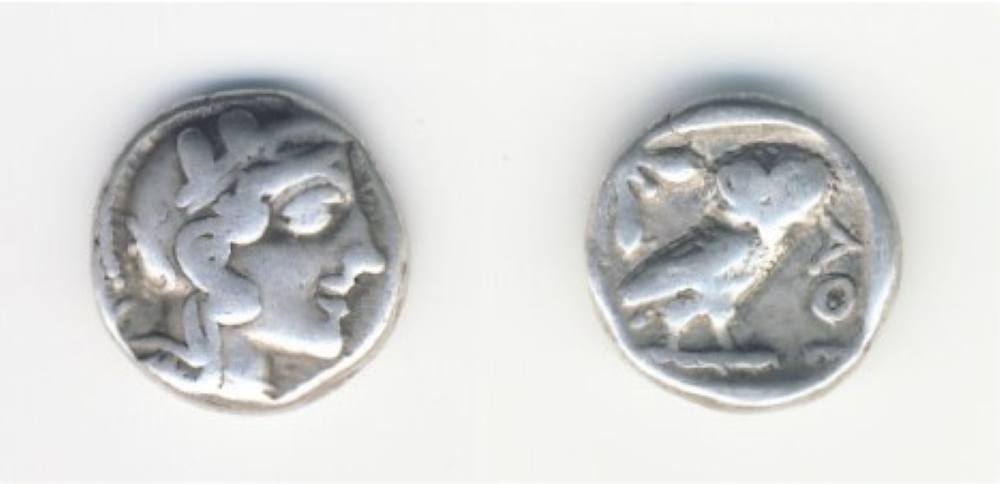
Chapter 1c. Aquila (Eagle). Athenian drachma depicting Athena and her owl, Silver coin, fifth century BC. Marshall Collection. Photo by author.

Chapter 1d. Ara (Incense Altar). Nike at altar. Vase painting c. 490 BC. Harvard Art Museums, Harvard University. See book for full citation.

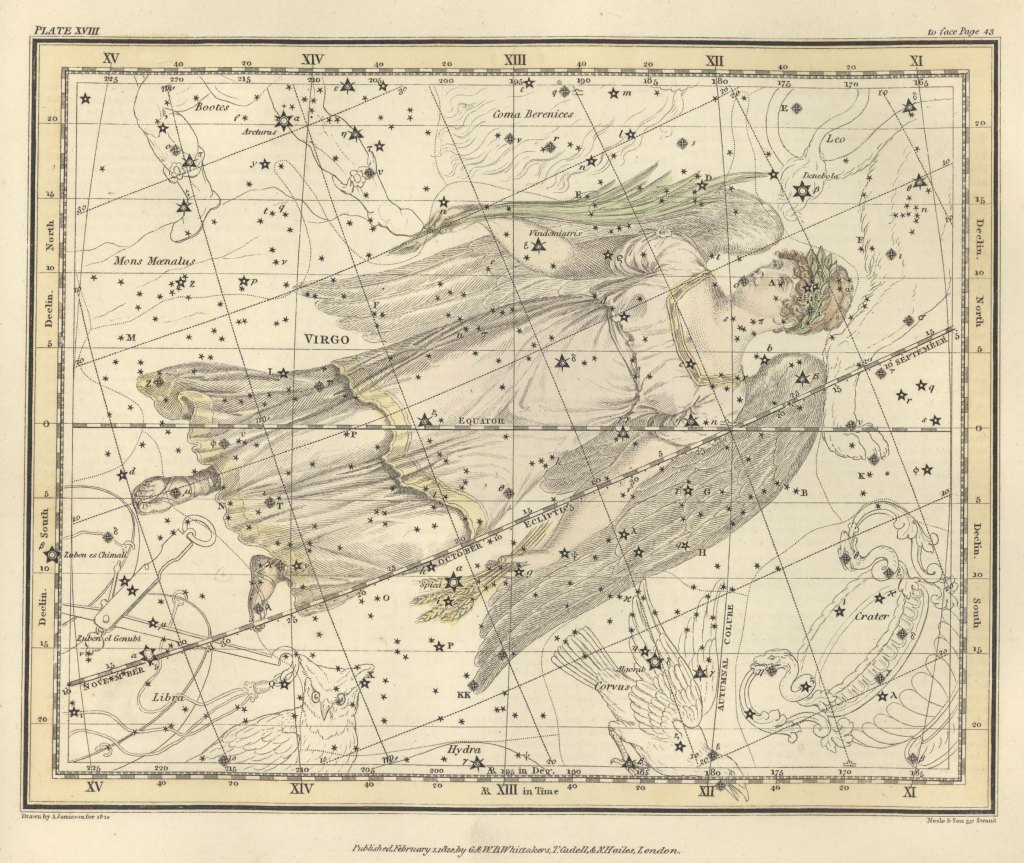
Chapter 2a. Virgo (Maiden). Celestial Atlas by Alexander Jamieson, 1822.

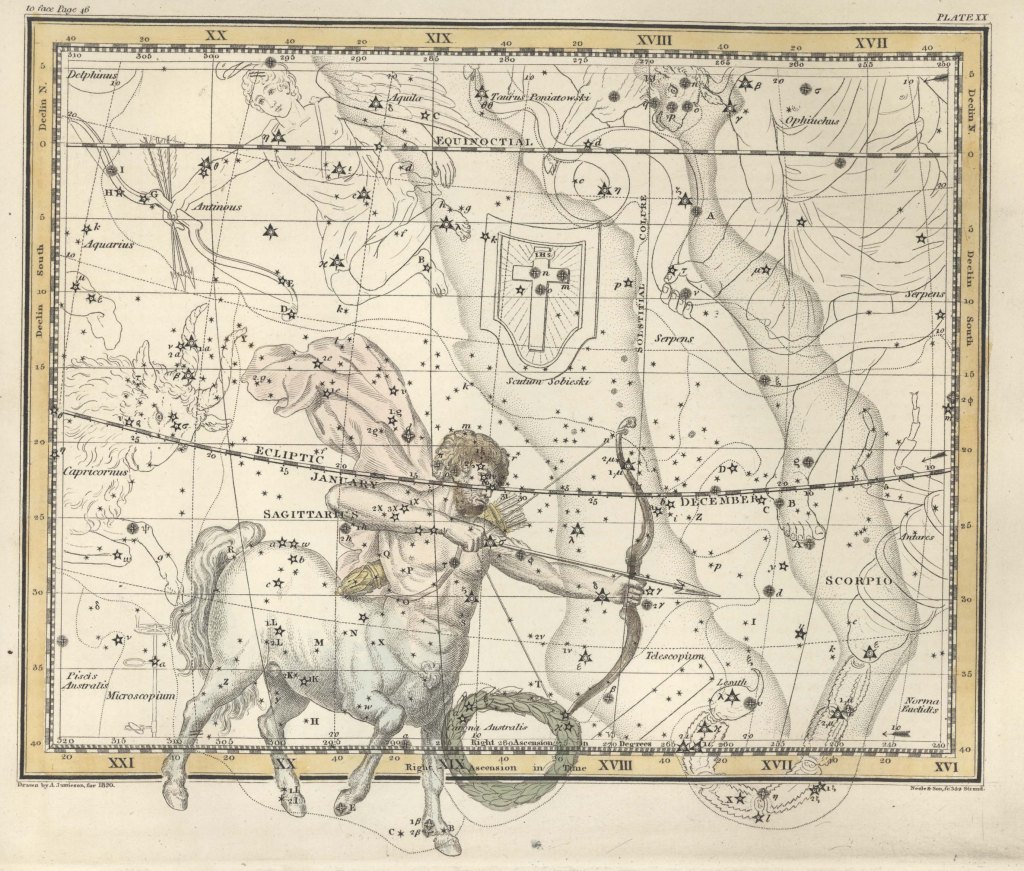
Chapter 2b. Sagittarius (Archer). Uranometria by Johann Bayer, 1603. Museum of History and Science Library, Oxford University. Photo by author.
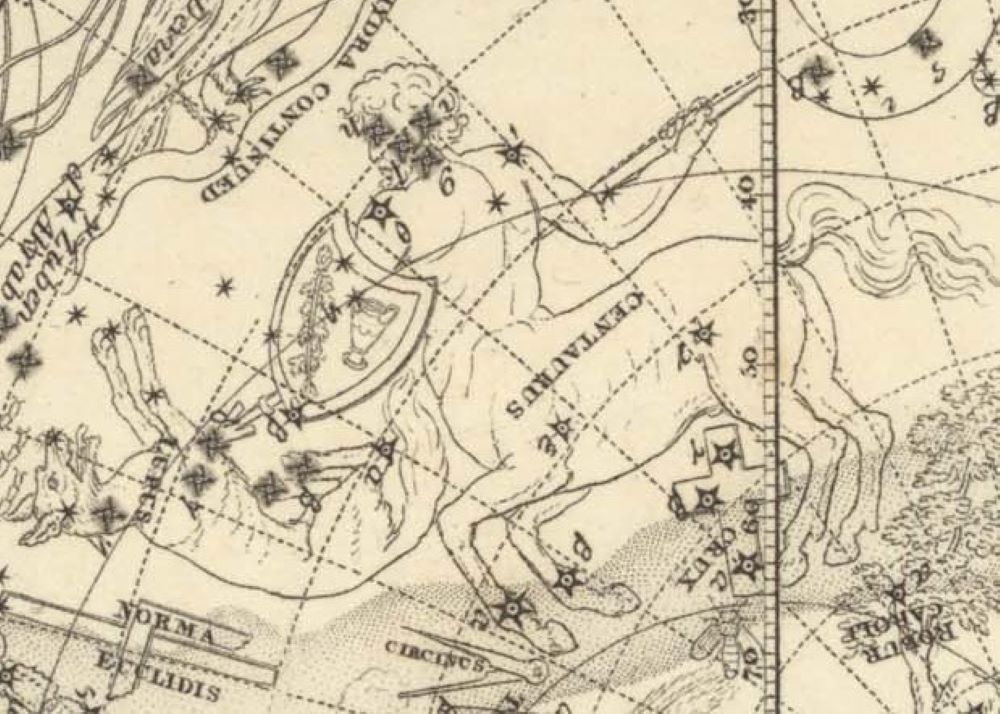
Chapter 2c. Centaurus (Centaur) and Lupus (Wild Beast). Celestial Atlas by Alexander Jamieson, 1822.

Chapter 2d. Triangulum (Triangle). Demeter, Persephone, and Triptolemus. Marble relief, copy of an original c. 440-430 BC in the National Archeological Museum, Athens. Copy is in the Archeological Museum, Eleusis, Greece. Photo by author.

Chapter 2e. Corvus (Crow) with Apollo pouring a libation. Vase painting c. 470 BC. Archeological Museum, Delphi, Greece. Photo by author.
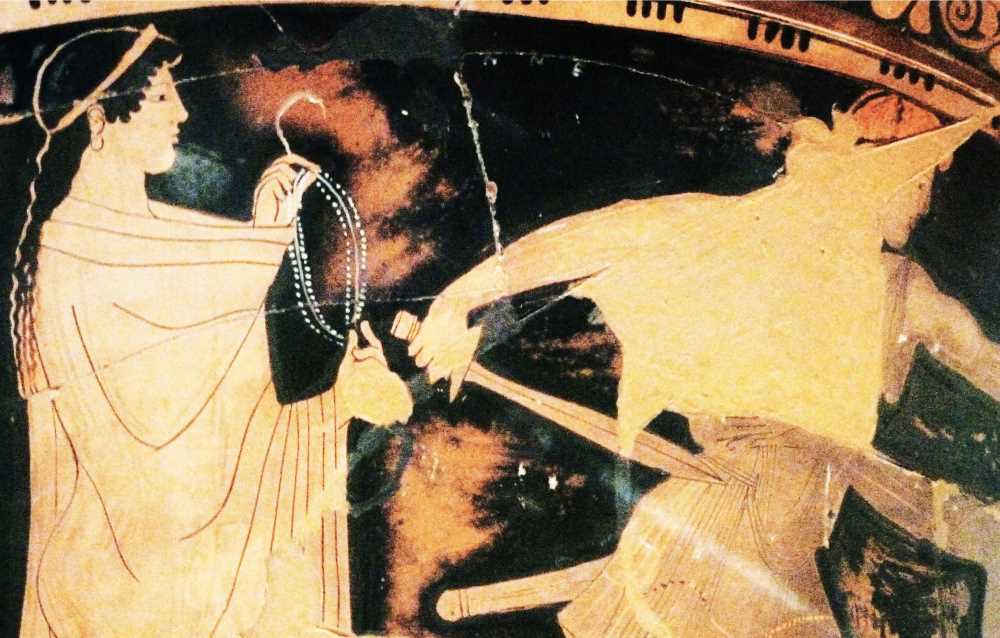
Chapter 3a. Corona Borealis (Northern Wreath), Ariadne giving thread to Theseus. Vase painting, 480 BC. National Archeological Museum, Athens. Photo by author.

Chapter 4a. Orion. Uranometria by Johann Bayer, 1603. Museum of History and Science Library, Oxford University. Photo by author.
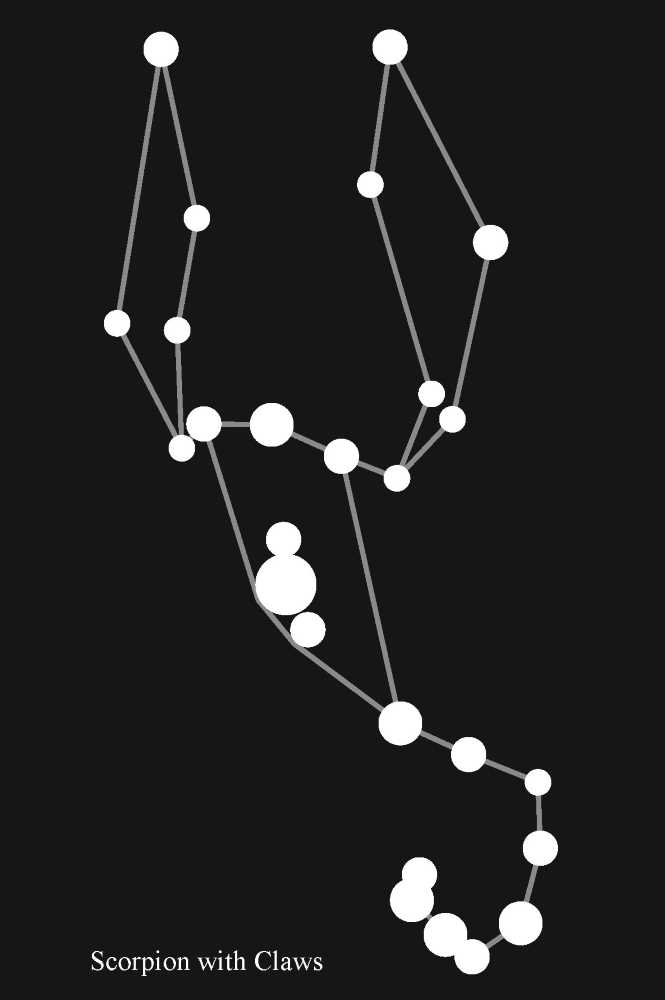
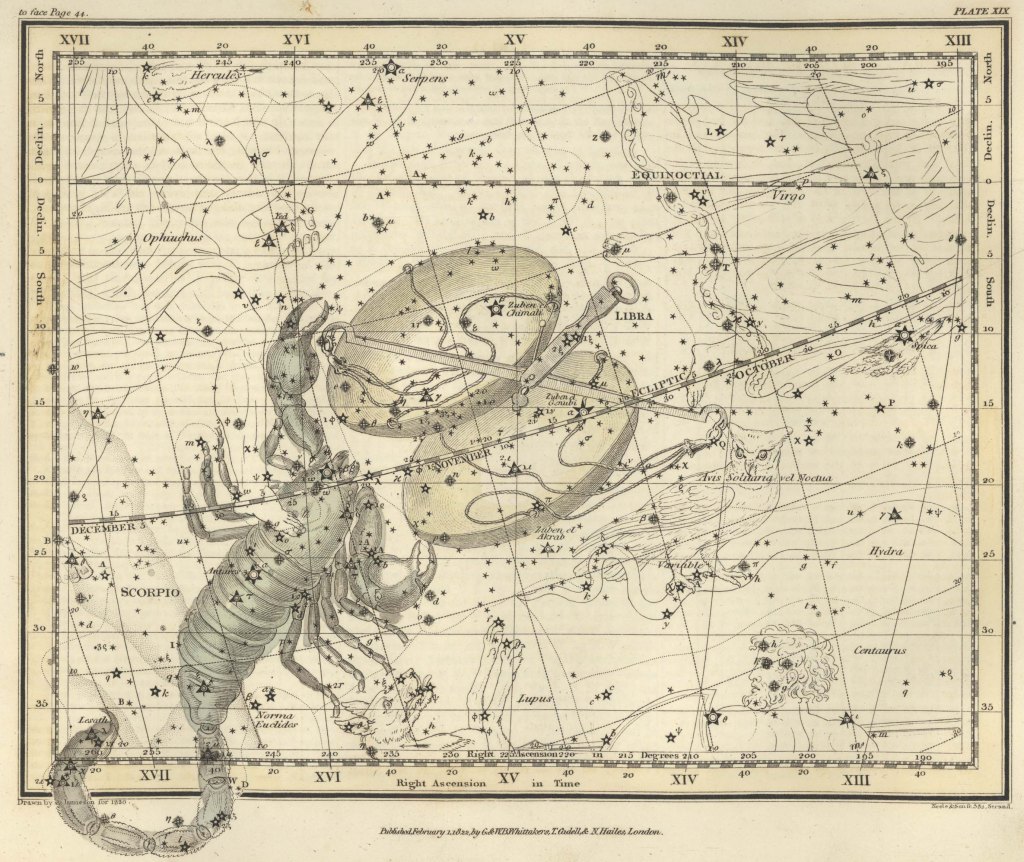
Chapter 4b. Scorpius (Scorpion) and Libra (Claws) are adjoining constellations.
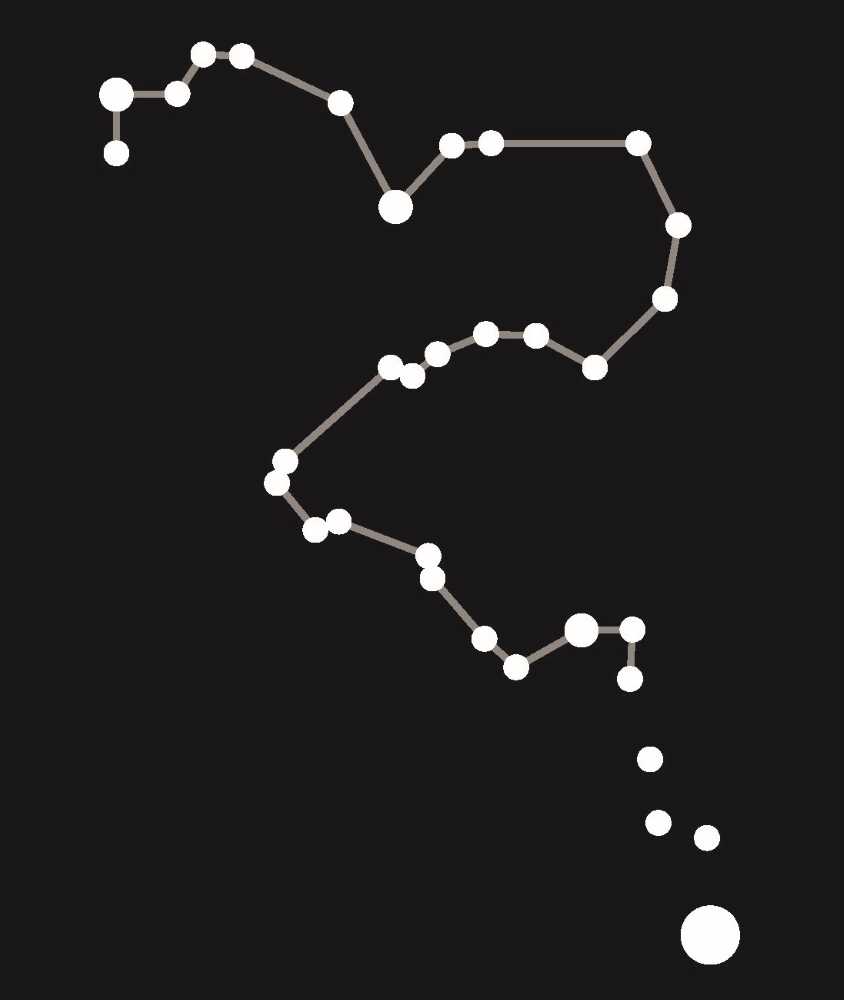
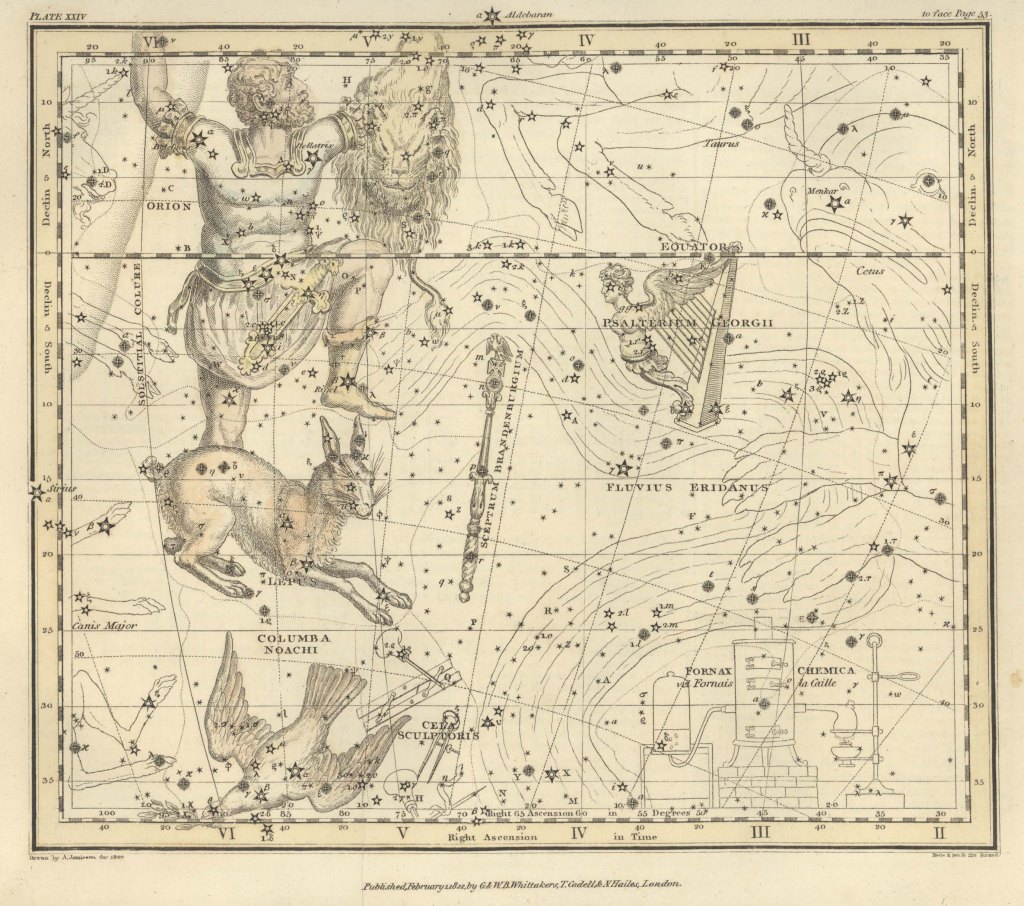
Chapter 4c. Eridanus (River) meanders among several constellations.
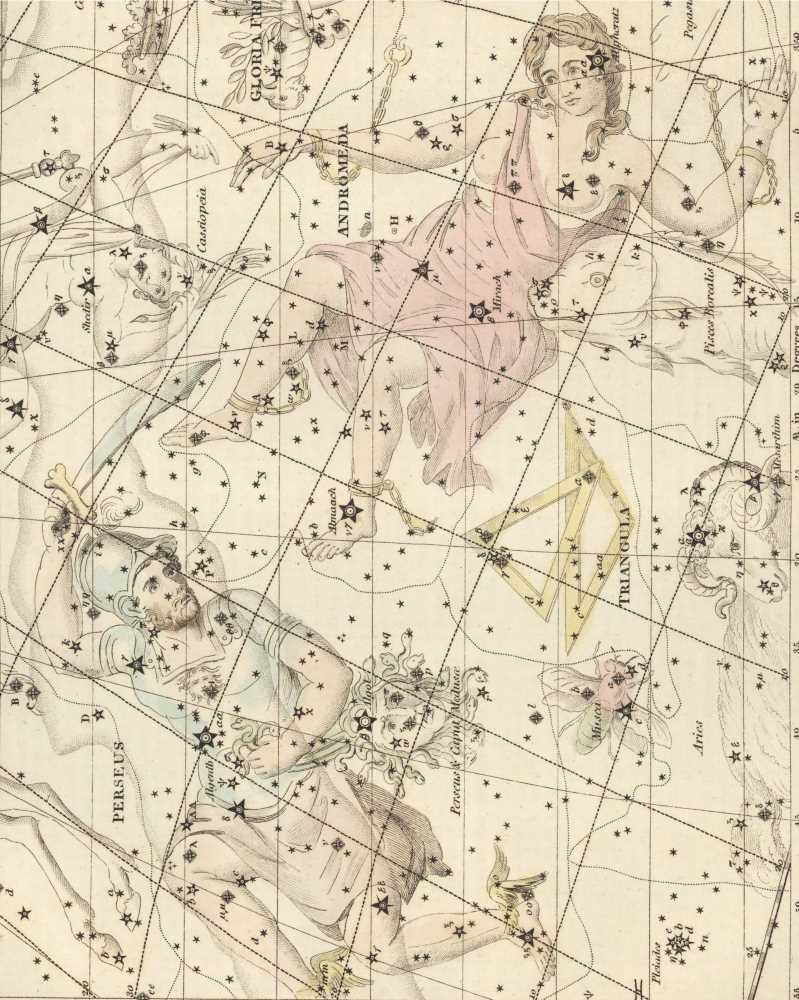
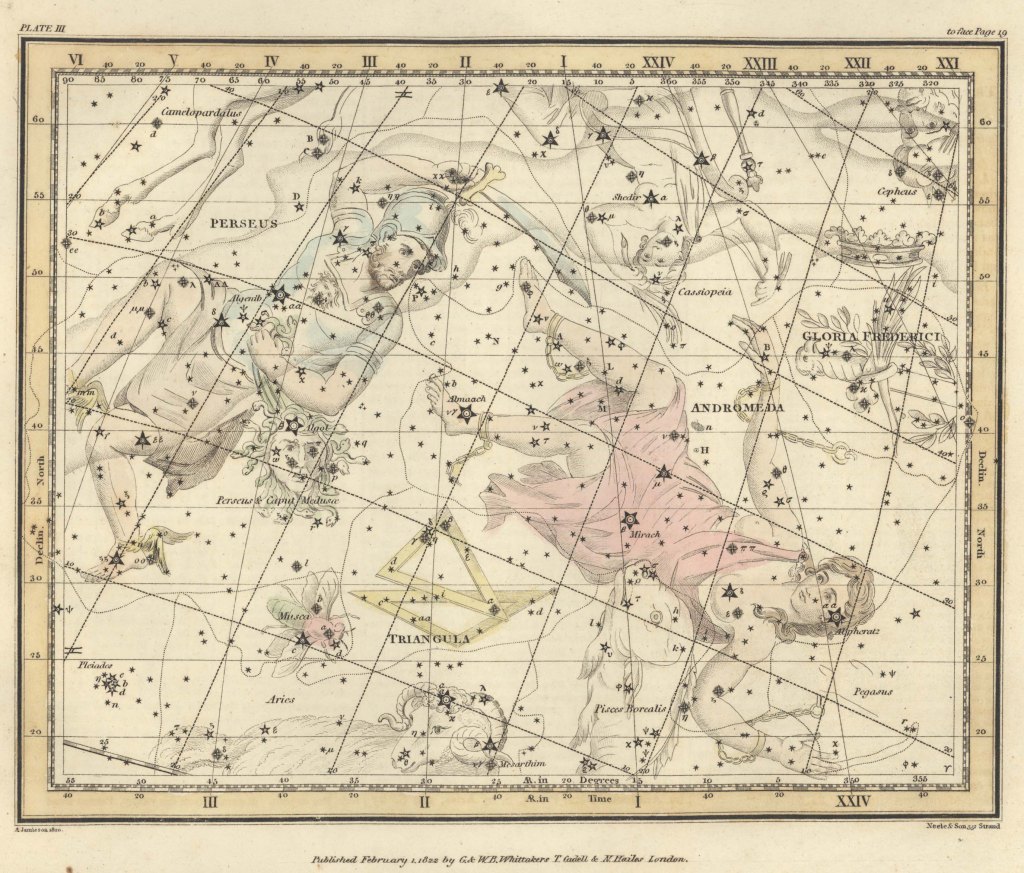
Chapter 5a. Perseus and Andromeda. Perseus holds the head of Medusa. Celestial Atlas by Alexander Jamieson, 1822.

Chapter 5b. Andromeda Rocks, where Andromeda was chained. Ancient port of Joppa (modern Jaffa), Israel. Photo by author.

Chapter 5c. The Andromeda Scene, as viewed in the stars, depicts a cluster of constellations portraying the story’s heroes and villains.

Chapter 5d. Hydra and Hercules (Kneeler). Vase painting from Eretria c. 550 BC. National Archeological Museum, Athens. Photo by author.
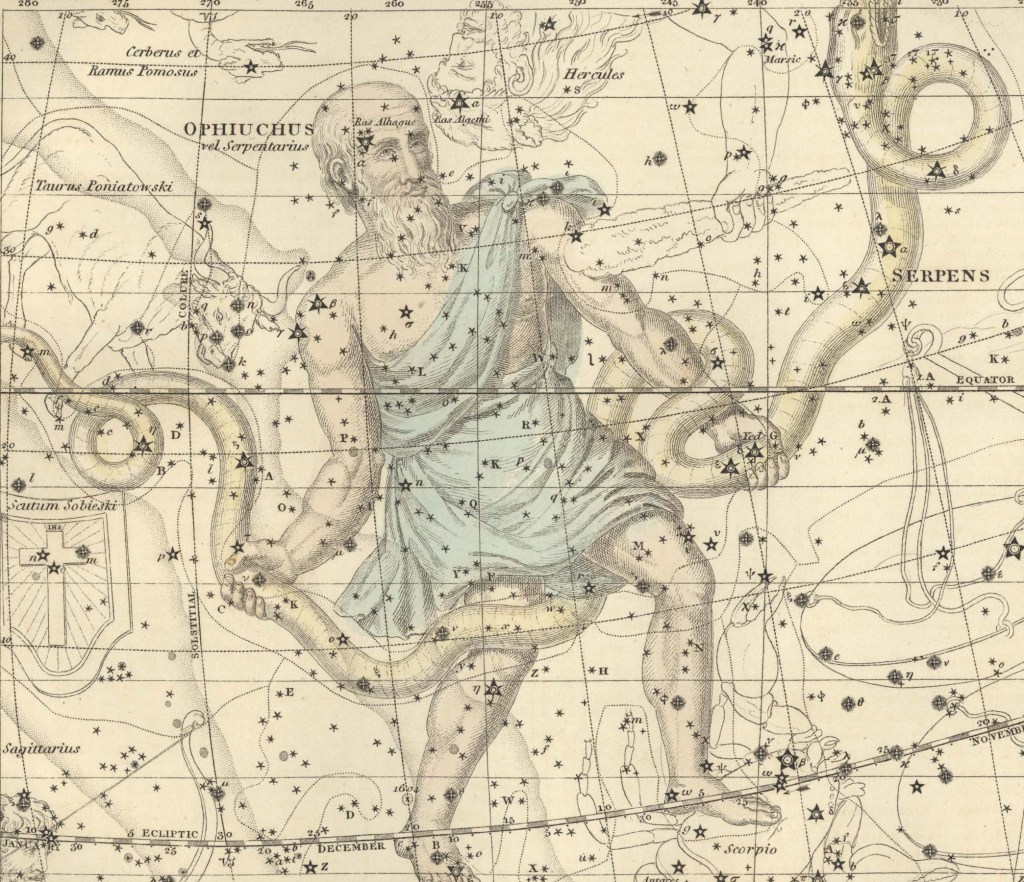
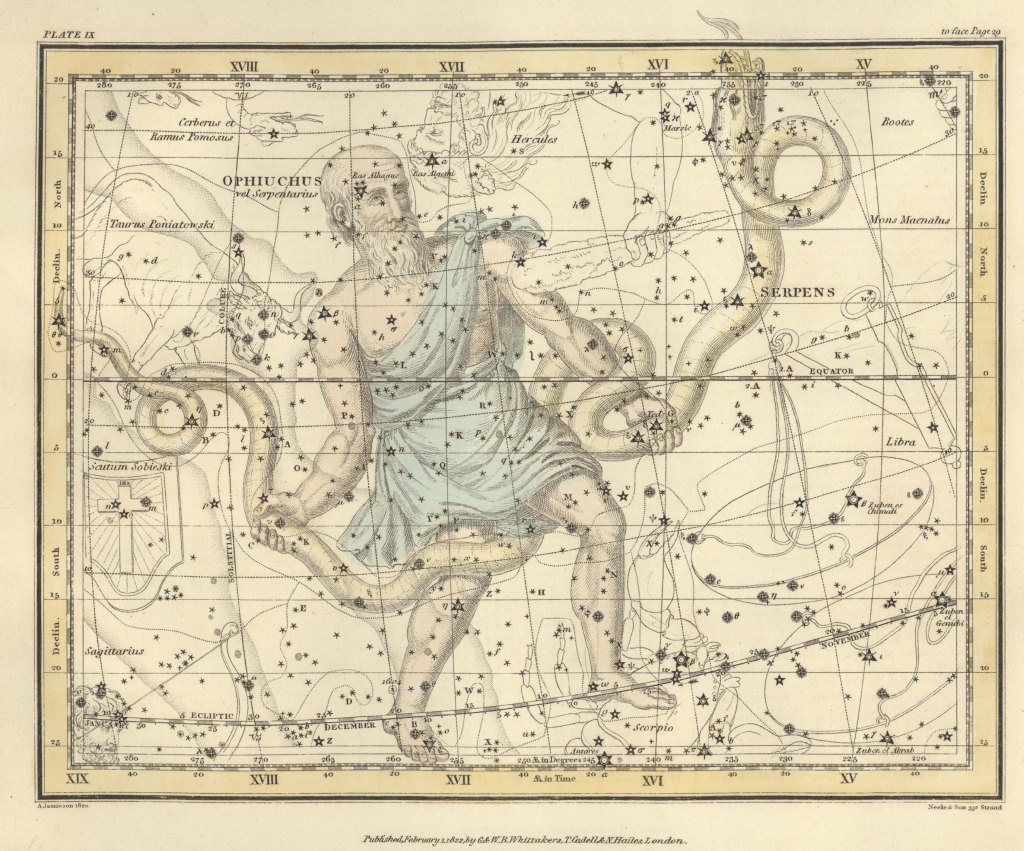
Chapter 6a. Ophiuchus (Snake Holder) and Serpens (Snake). Celestial Atlas by Alexander Jamieson, 1822.
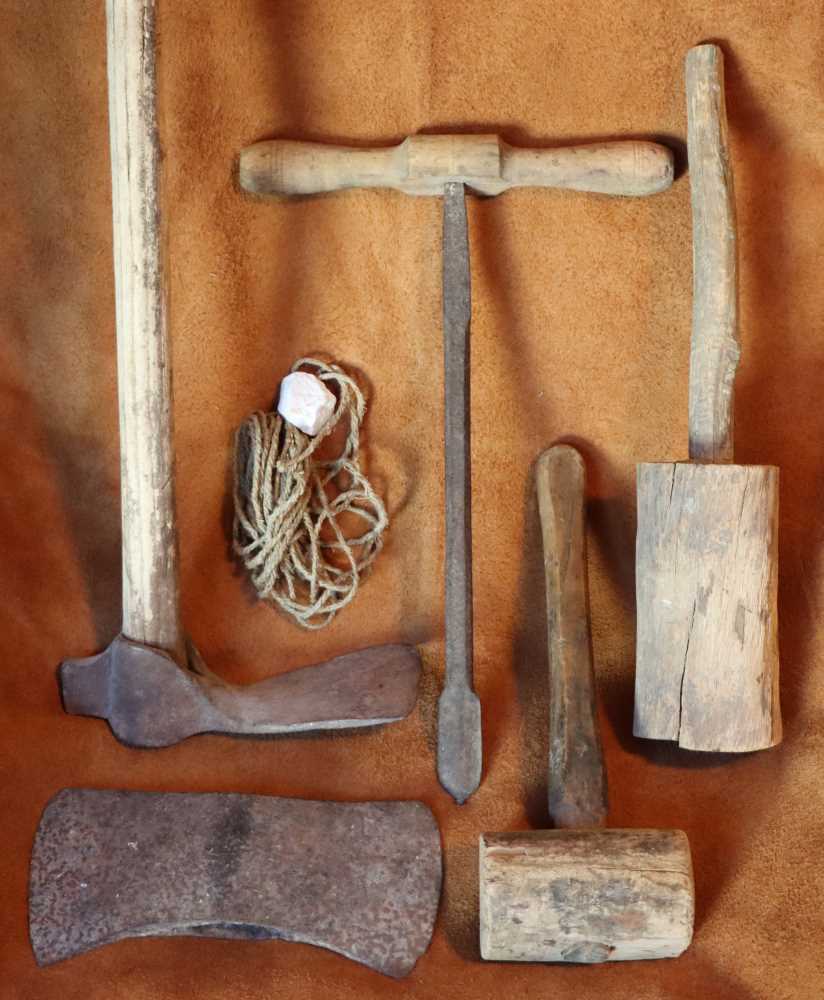
Chapter 6b. Ancient shipbuilding tools: adze, drill, mallets, axe, chalk line. Marshall Collection. Photo by author.
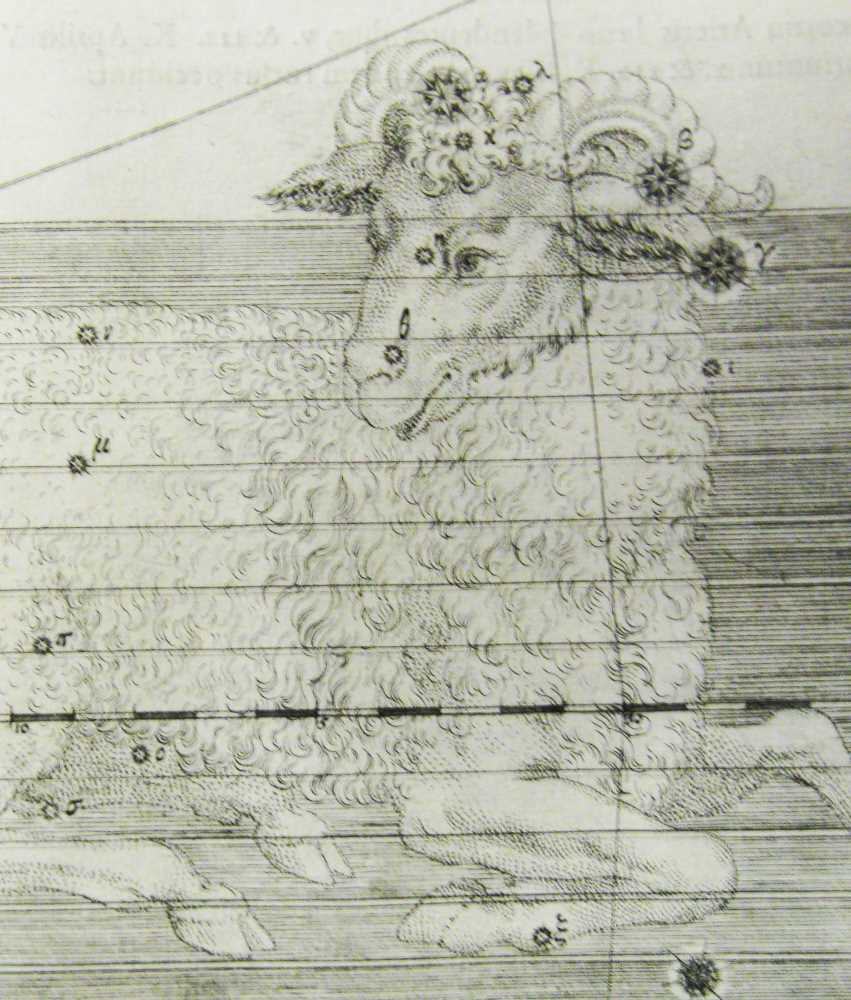
Chapter 6c. Aries (Ram). Uranometria by Johann Bayer, 1603. Museum of History and Science Library, Oxford University. Photo by author.
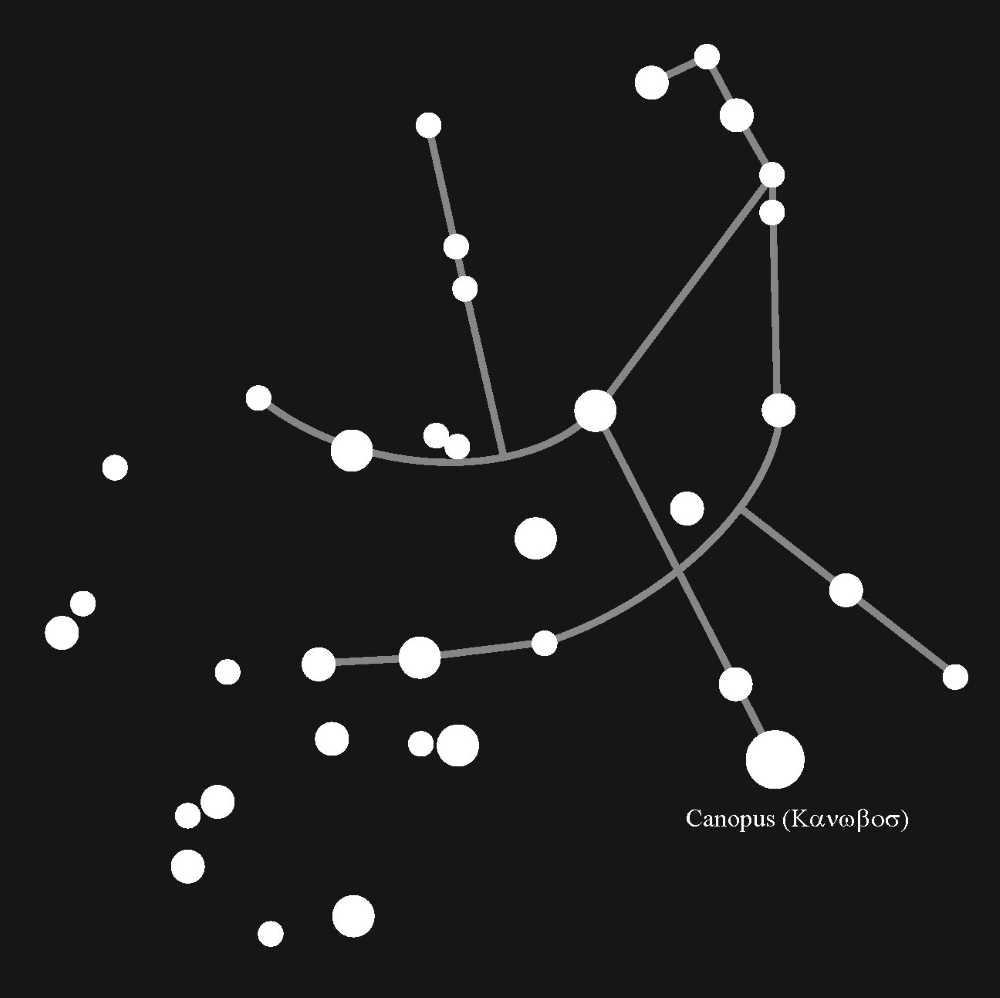
6d. Argo Navis (Argo). The ship’s stern arches above while the prow is obscured in the mist of the Milky Way.
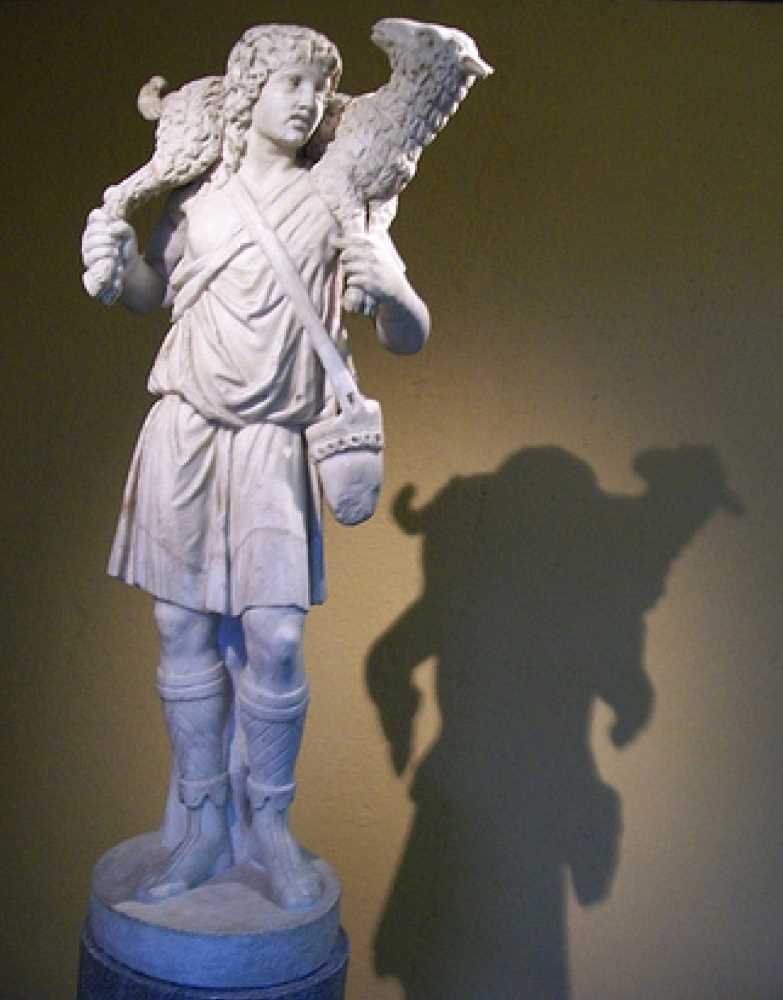
Chapter 6e. The Aries (Ram) constellation pose appeared in the Good Shepherd motif of archaic Greece and continued into the Christian era. See Hermes Kriophoros, below. Sculpture c. 250 AD. Vatican Museum, Vatican City. Photo by author.

Chapter 6f. Serpens (Snake). The healing serpent appears on pharmacy signs throughout Greece, like this one in Stavros on the island of Ithaca. Photo by author.
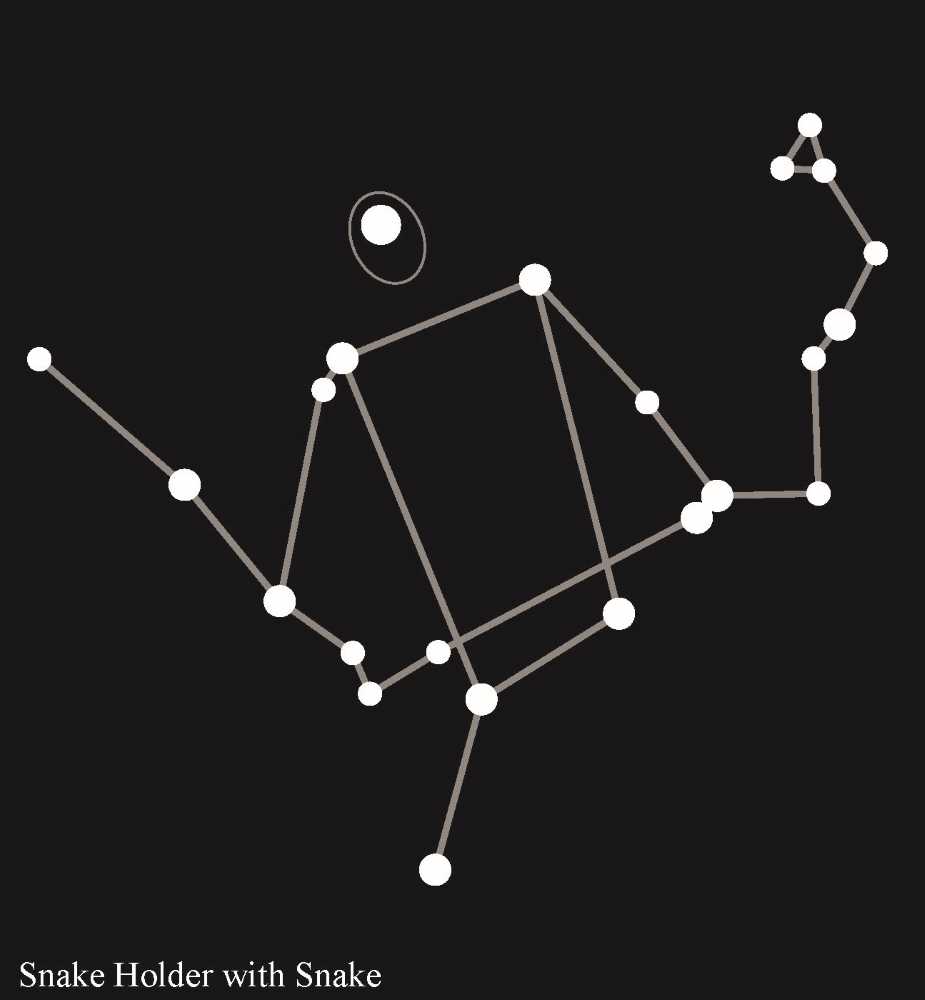
Chapter 6g. Ophiuchus (Snake Holder) and Serpens (Snake) are adjoining constellations.

Chapter 6h. Ophiuchus (Snake Holder) and Serpens (Snake) represent Asclepius, the famed physician, and his healing snake. Sculpture copied from an original of the fourth century BC. Epidaurus Theater Museum, Epidaurus, Greece. Photo by author.
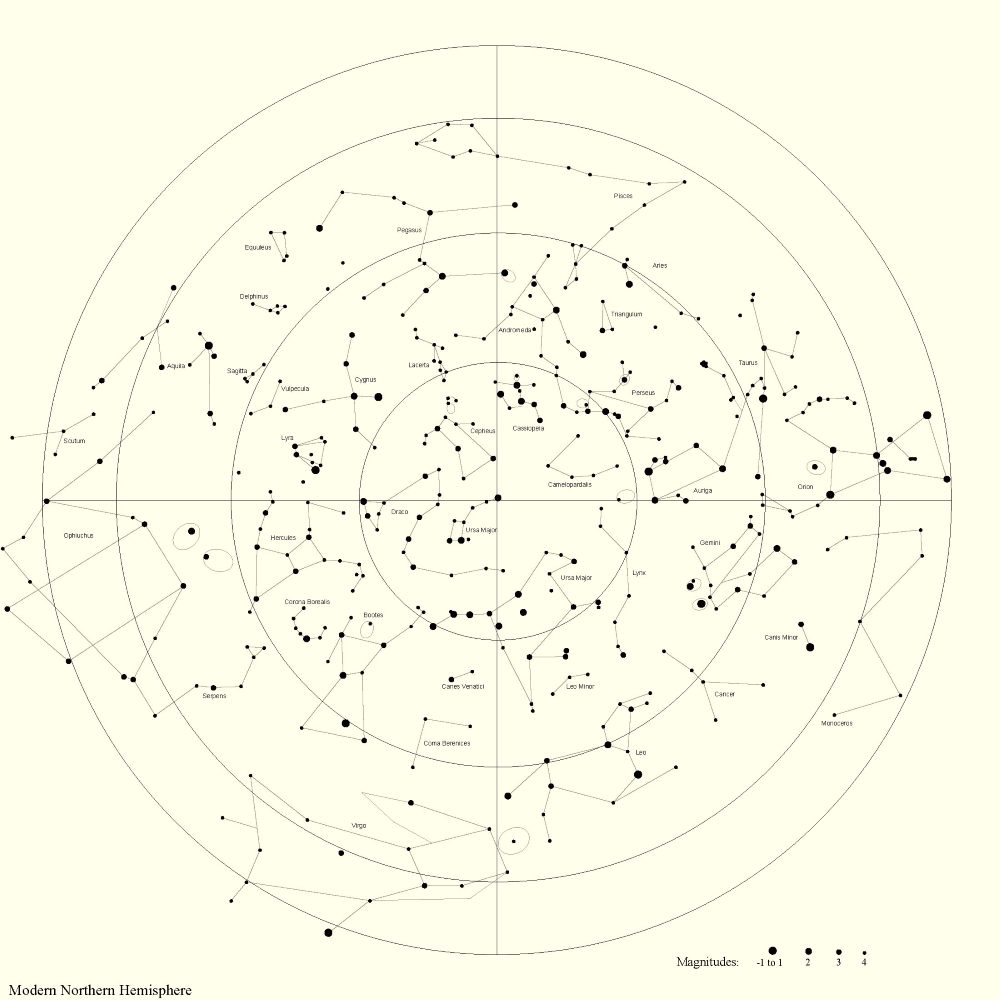
PART 2a. Modern Hemisphere Chart of Northern Constellations.
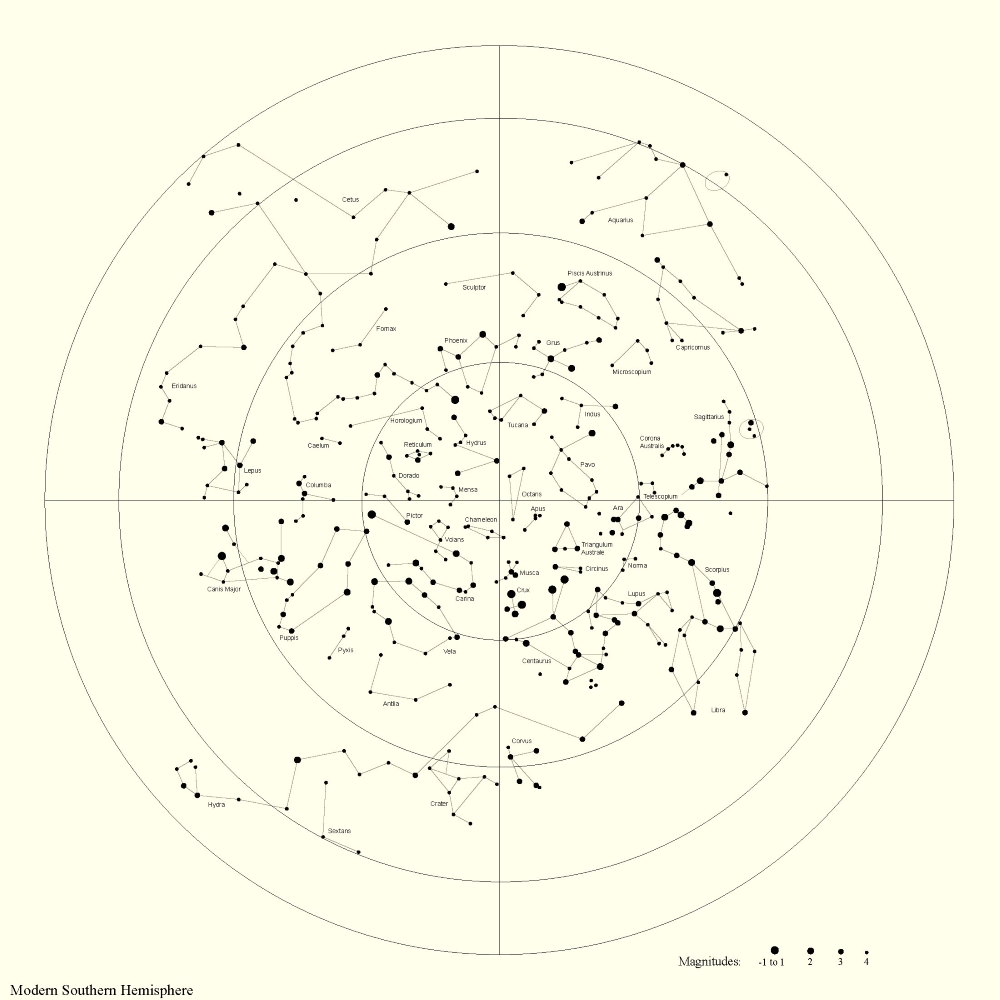
PART 2b. Modern Hemisphere Chart of Southern Constellations.
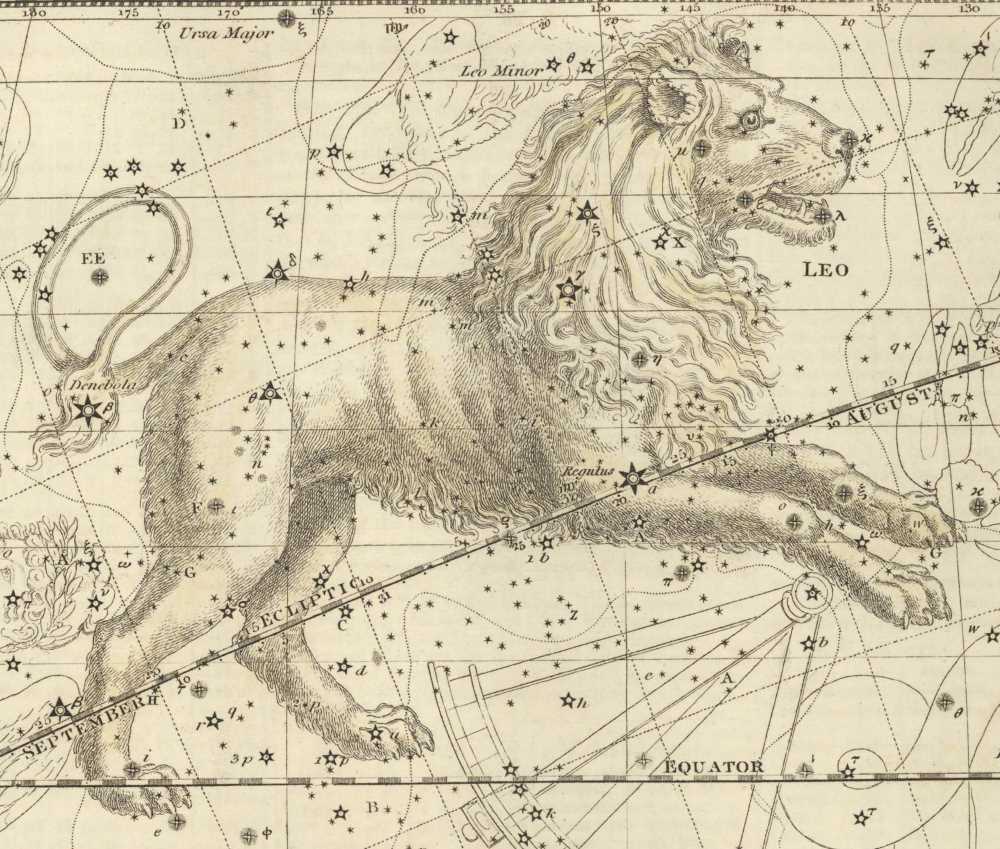
Chapter 9a. Leo (Lion). Celestial Atlas by Alexander Jamieson, 1822.
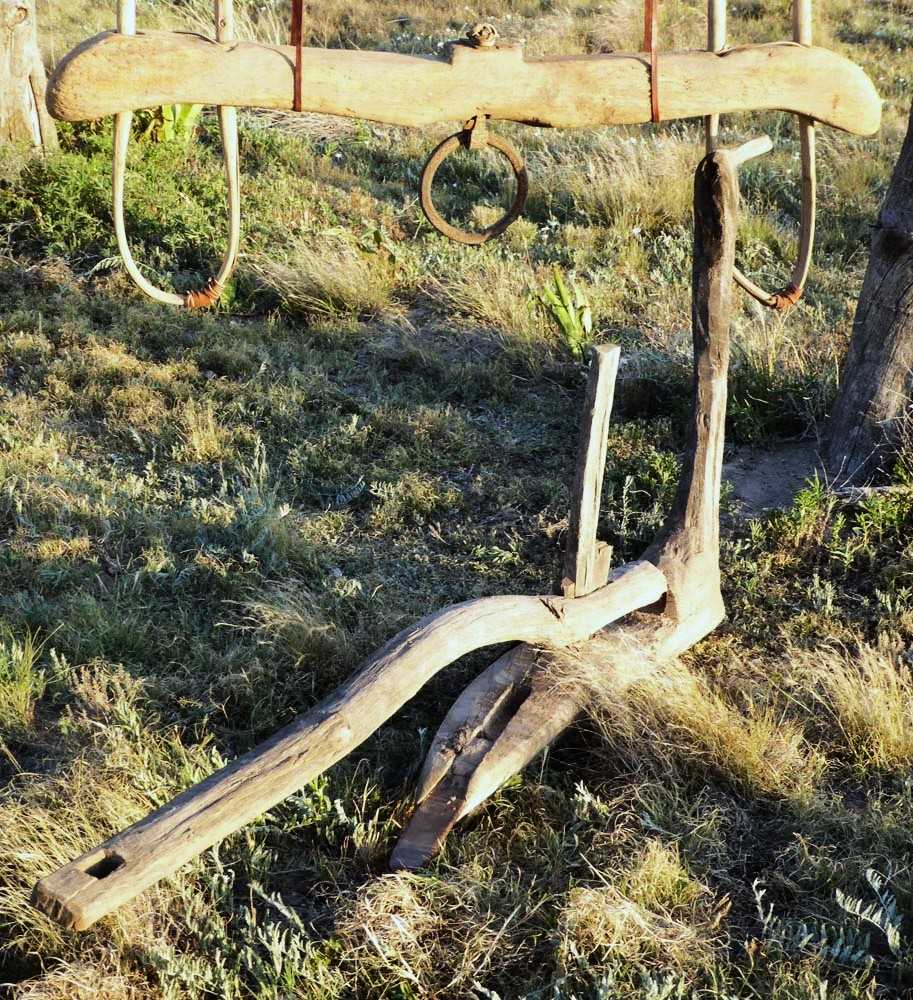
Chapter 9b. Plow and yoke typical of the ancient Mediterranean. Marshall Collection. Photo by author.
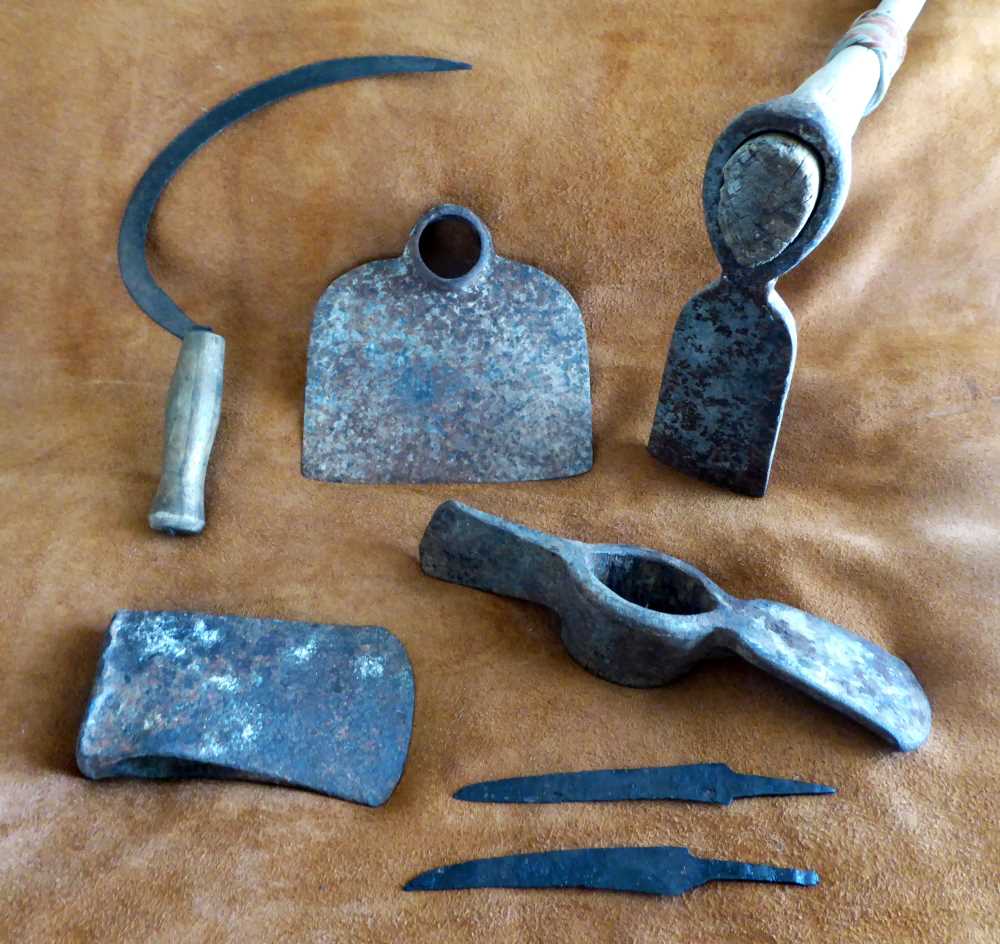
Chapter 9c. Ancient Greek-Scythian knives, and farm tools typical of ancient Greece: sickle, hoe, axe, and mattocks. Marshall Collection. Photo by author.
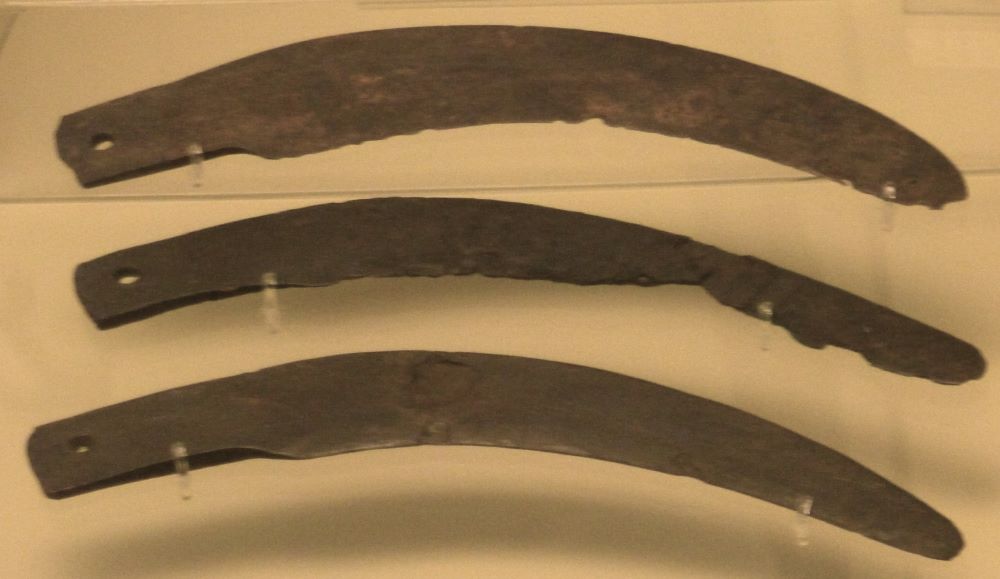
Chapter 9d. Sickles used for the grain harvest. Mycenae c. 1250-1180 BC. Archeological Museum, Mycenae, Greece. Photo by author.
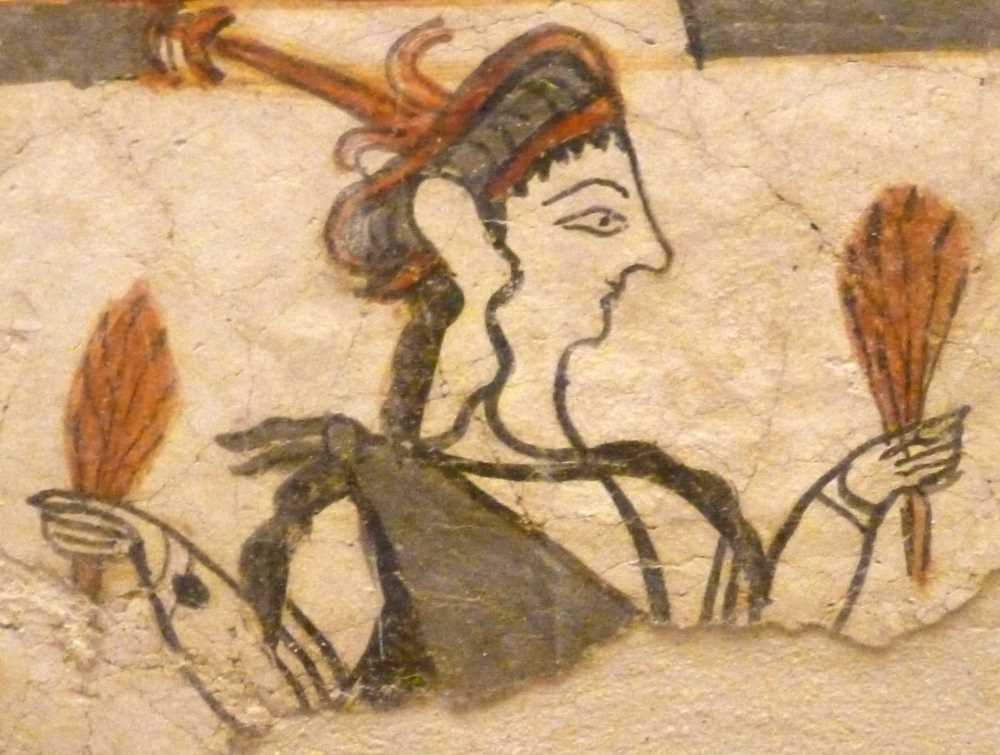
Chapter 9e. Grain harvest at Mycenae, c. 1250-1180 BC. Archeological Museum, Mycenae, Greece. Photo by author.
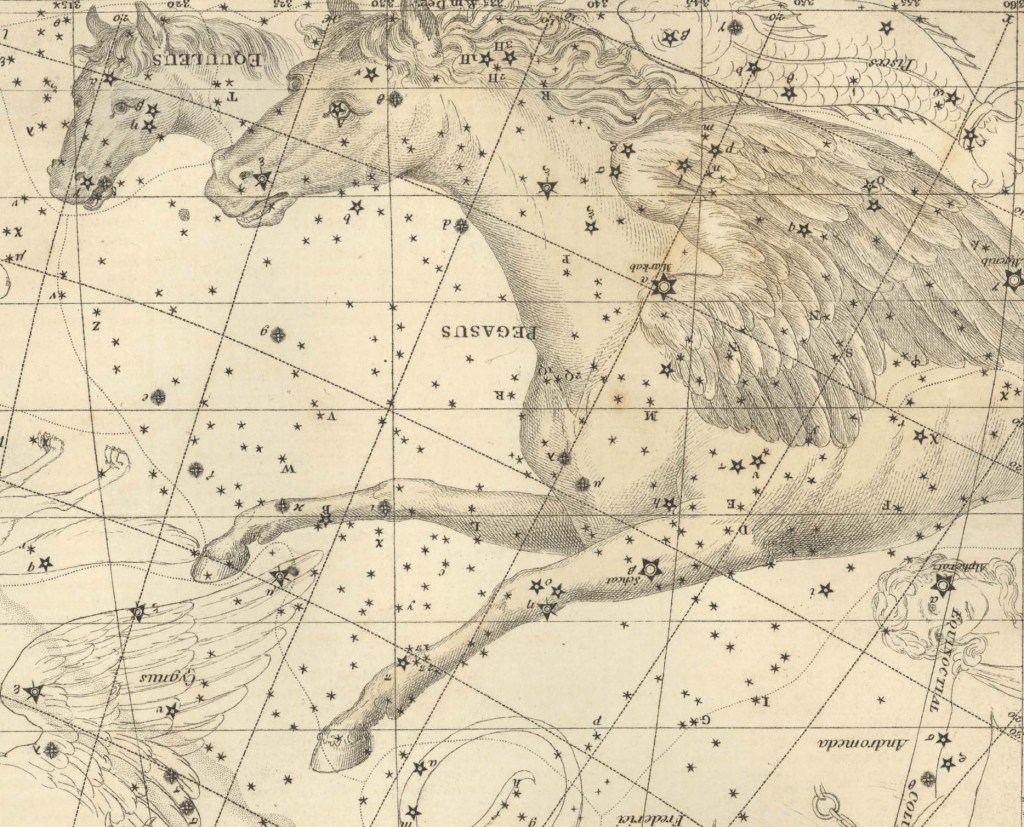
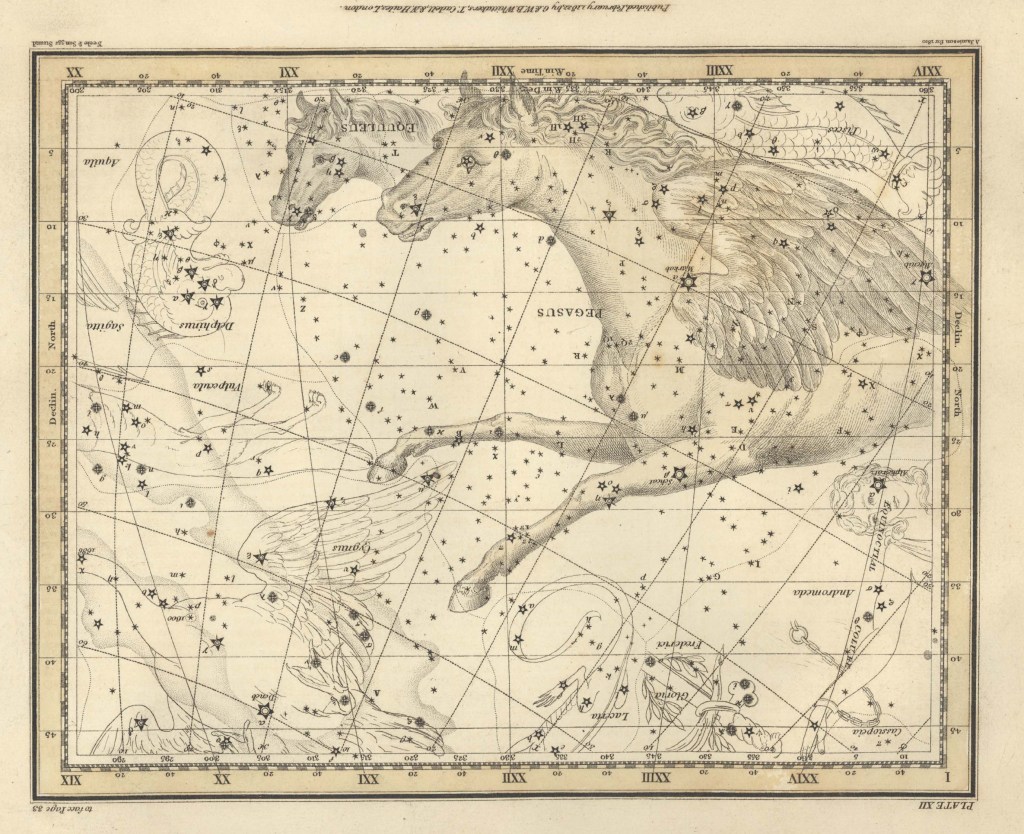
Chapter 10a. Pegasus (Horse) and Equuleus (Horse Head). Celestial Atlas by Alexander Jamieson, 1822.
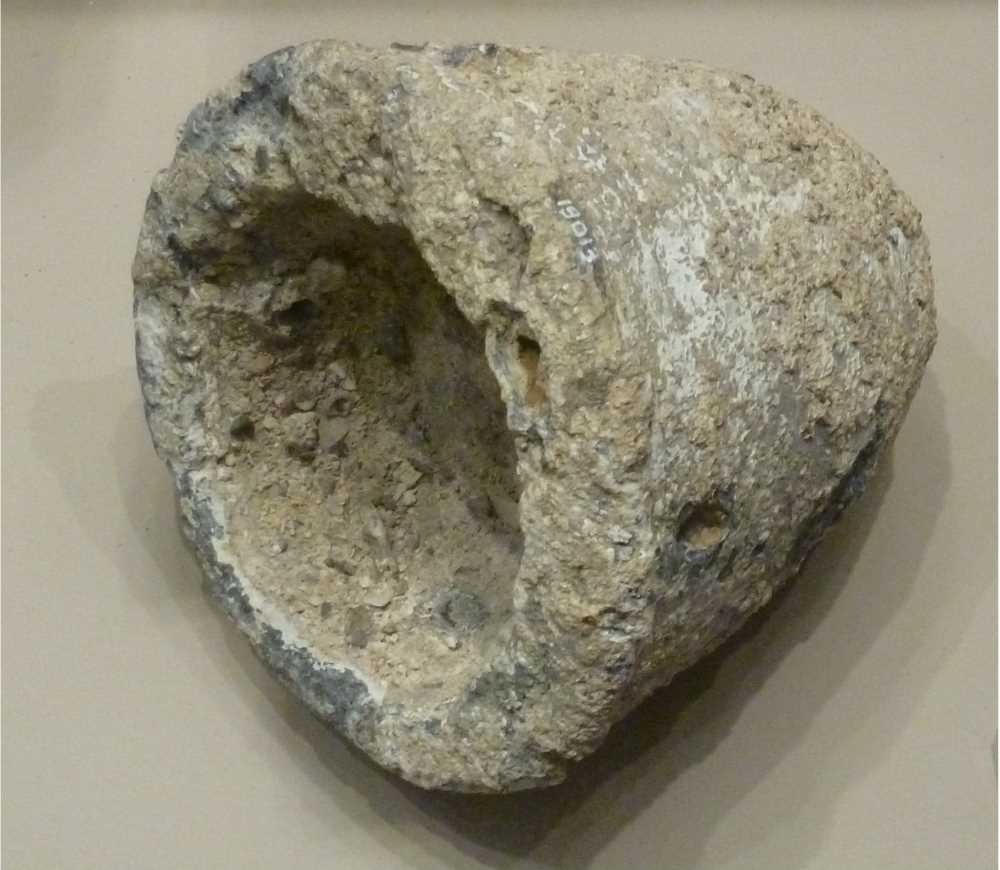
Chapter 10b. Sounding Weight for measuring water depth and observing seabed sediment. National Archeological Museum, Athens. Photo by author.
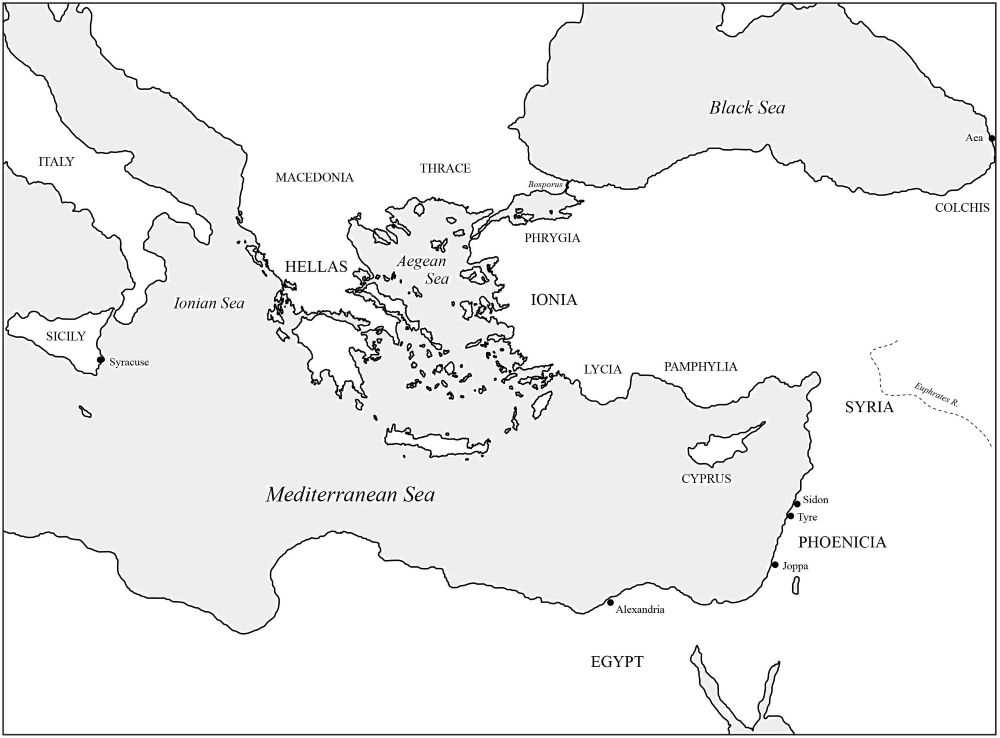
Appendix 5a. Map of the Mediterranean Sea.

Appendix 5b. Map of the Aegean Sea.

Works Cited 1a. Homer depicted on a bronze coin of Smyrna, second century BC. Marshall Collection. Photo by author.
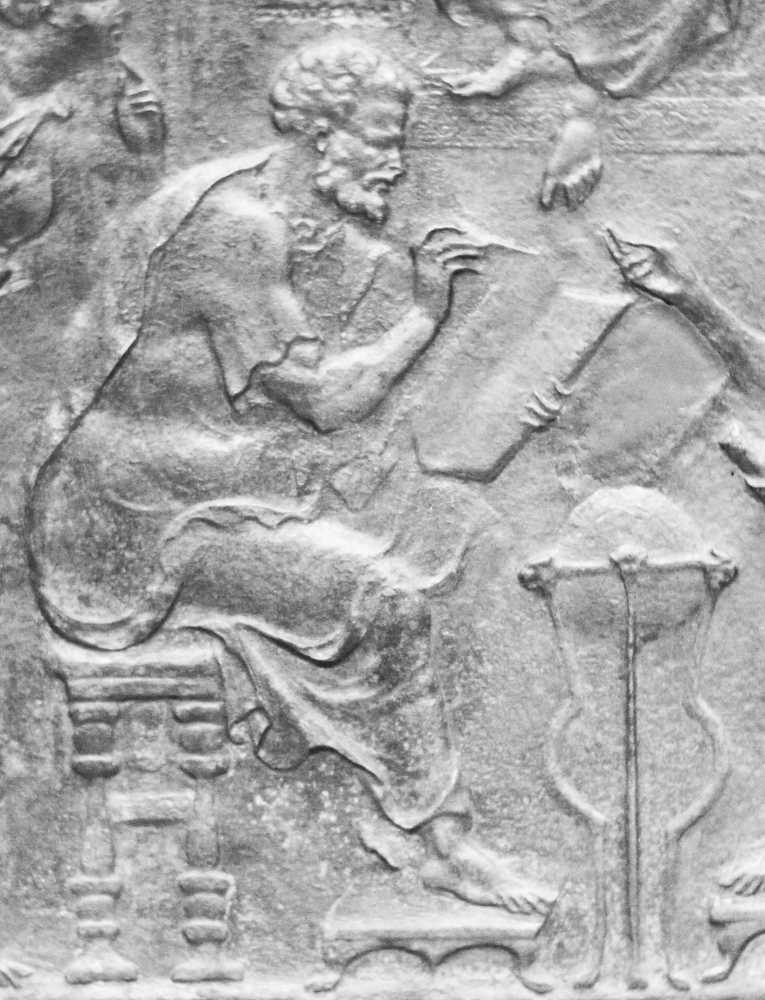
Works Cited 1b. Claudius Ptolemy depicted on a silver plate, sixth century AD. Getty Museum, Los Angeles. Photo by author.
ADDITIONAL IMAGES BY RELATED CHAPTER NUMBER
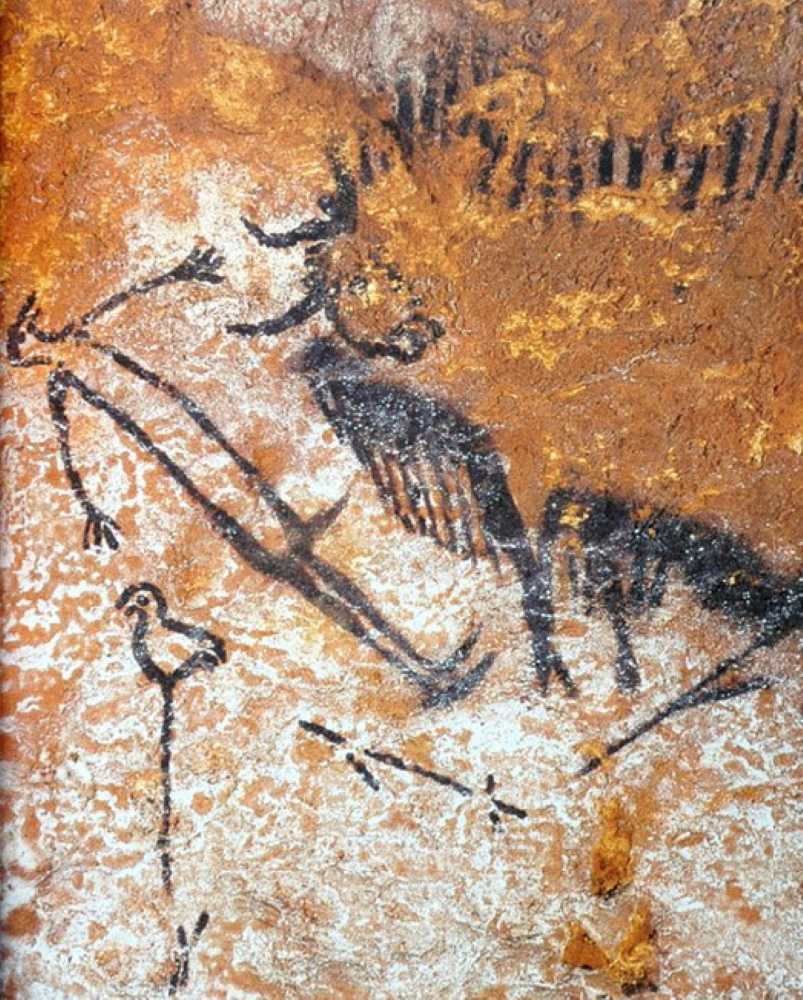
INTRO 1a1. Beasts depicted as superior to humans. Cave painting c. 15,000 BC. Lascaux Cave, France.
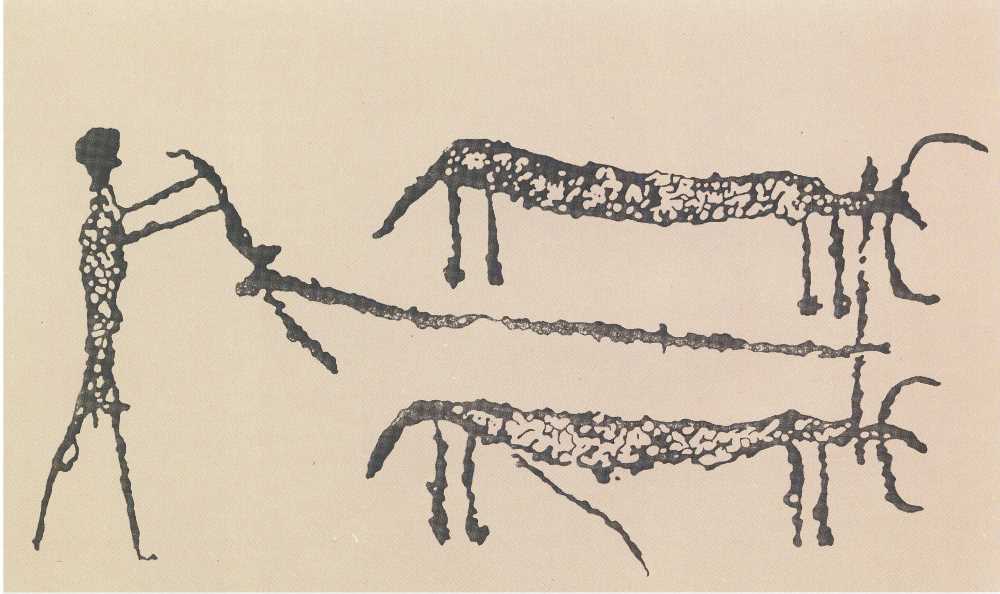
INTRO 1a2. Humans depicted as superior to beasts. Pictograph of the 4000-3000 BC. Late Neolithic plowing with oxen. Stela Bagnolo II, Val Camonica, Italy.
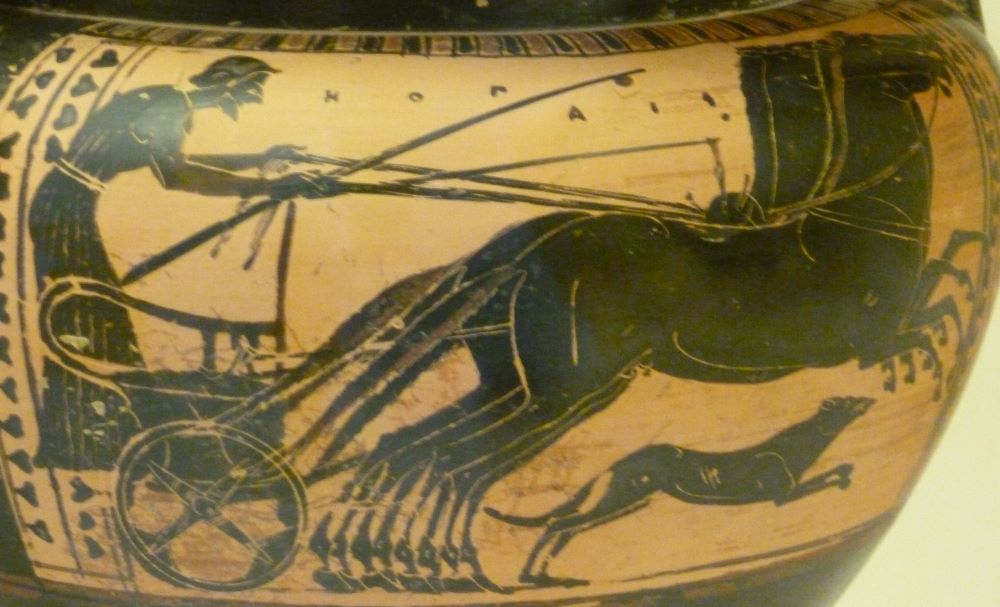
Chapter 1b1. Charioteer driving a four-horse chariot. Vase painting, 525-500 BC. National Archeological Museum, Athens. Photo by author.

Chapter 1b2. Aphrodite of Melos. Marble sculpture, 130-100 BC. Musee de Louvre, Paris. Photo by author.
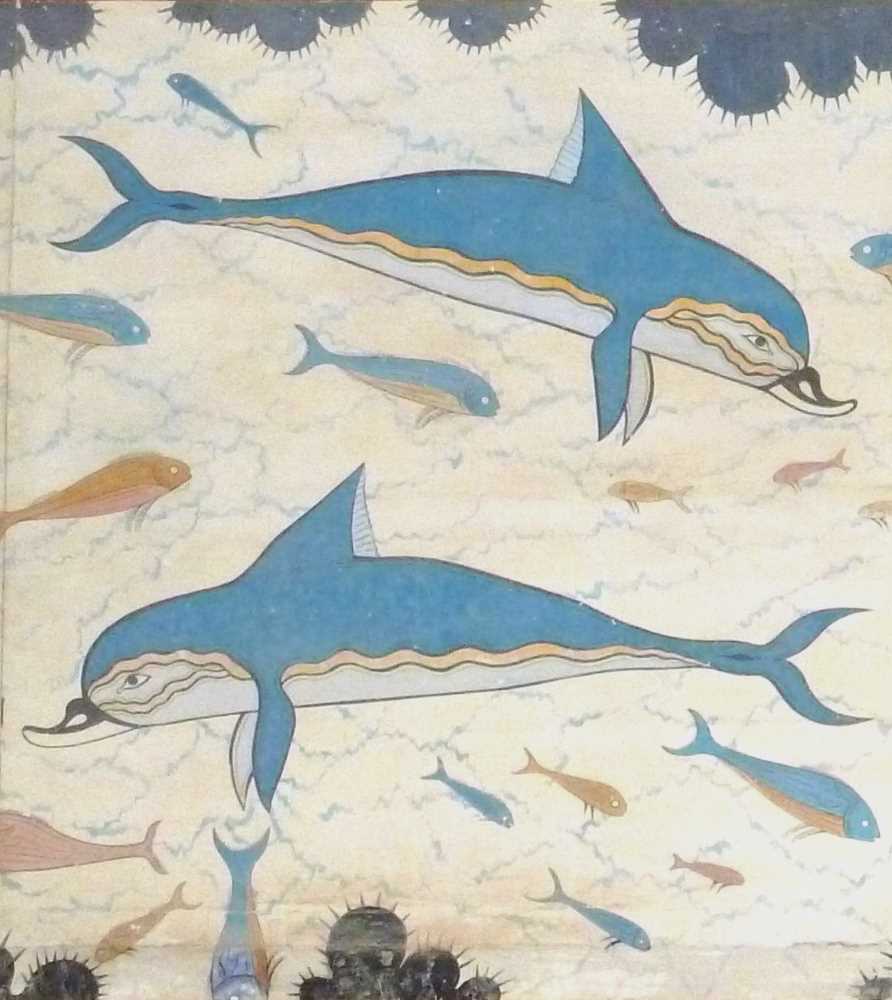
Chapter 1b3. Dolphins and fishes. Fresco at Knossos, copy of an original from 1600-1450 BC. Palace of Knossos, Crete. Photo by author.
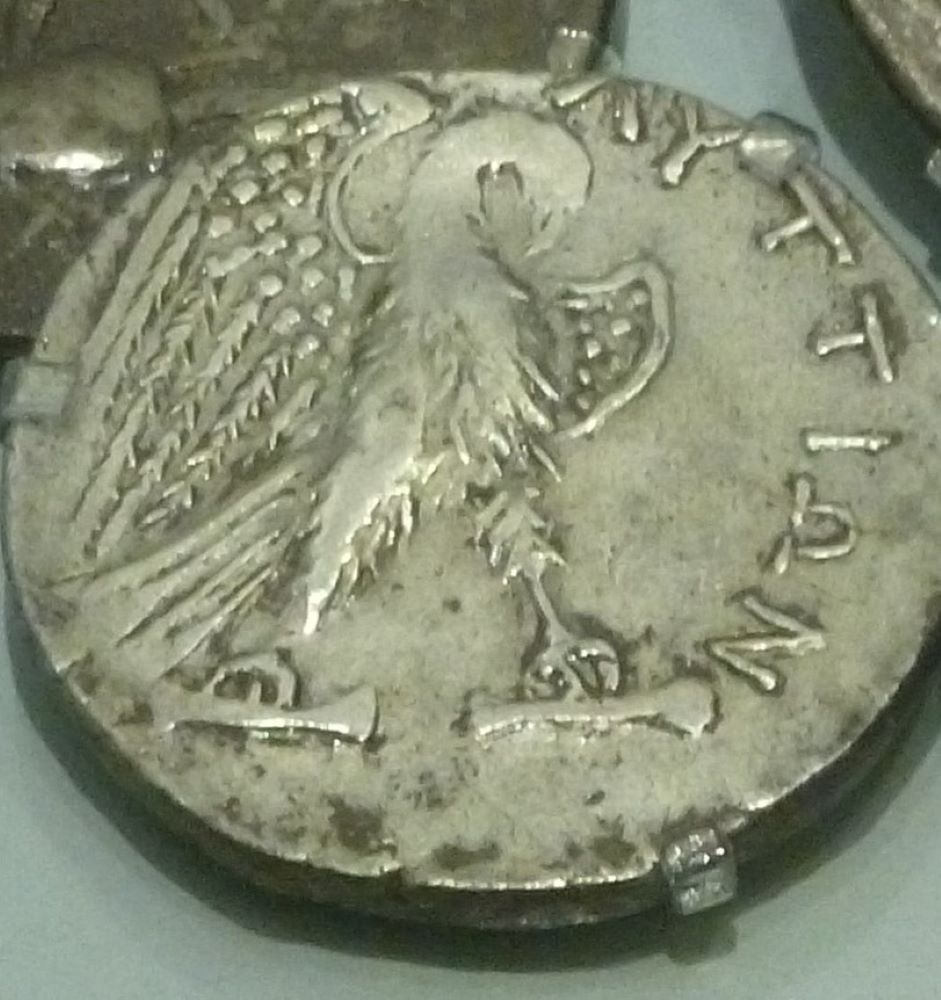
Chapter 1c1. Eagle coin, first century BC. Archeological Museum, Iraklio, Crete. Photo by author.
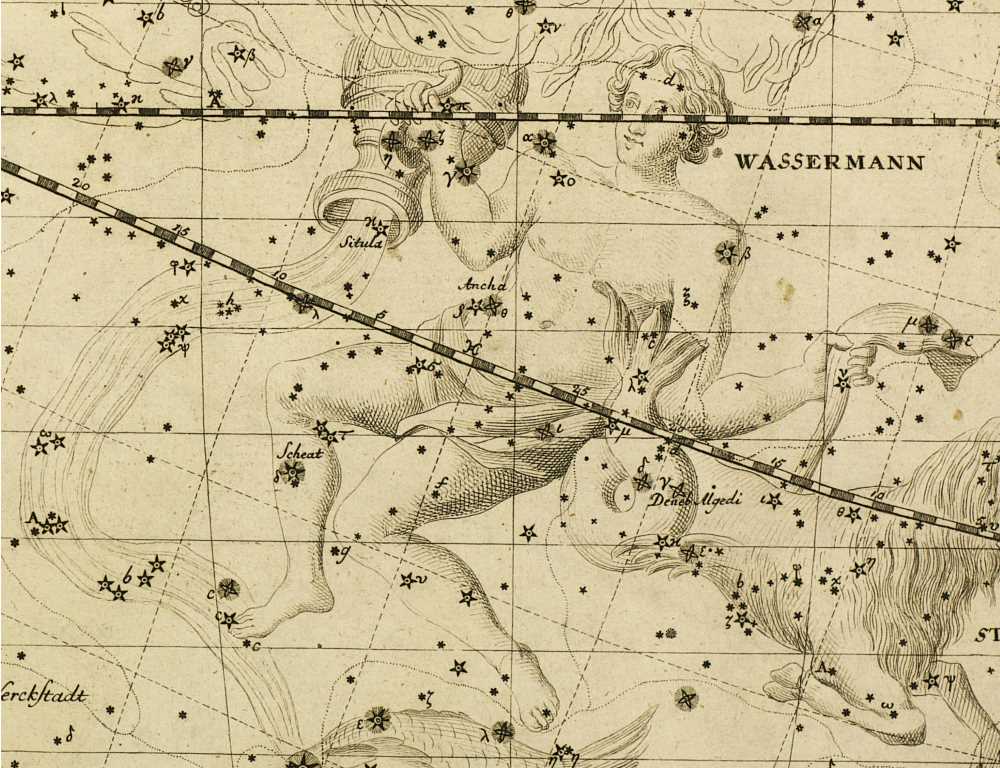
Chapter 1c2. Aquarius (Water Bearer) constellation. Vorstellung der Gestirne by Johann Bode, 1782. Rare books, Texas Tech University.
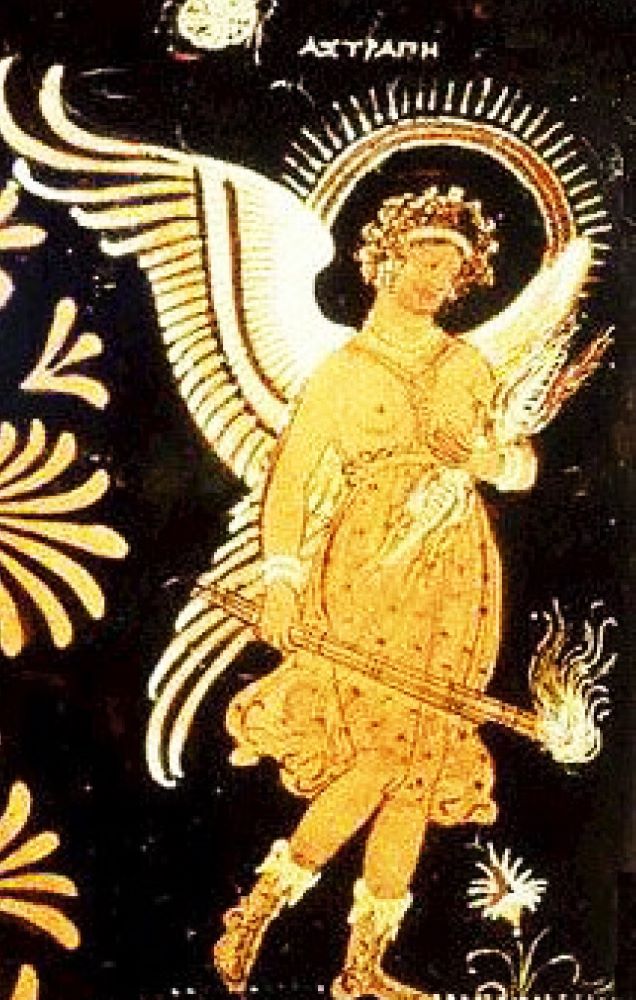
Chapter 2a1. Virgo ( Maiden) as Astraea. Vase painting from Apulia c. 350-330 BC. Getty Museum, Los Angeles. Photo by author.
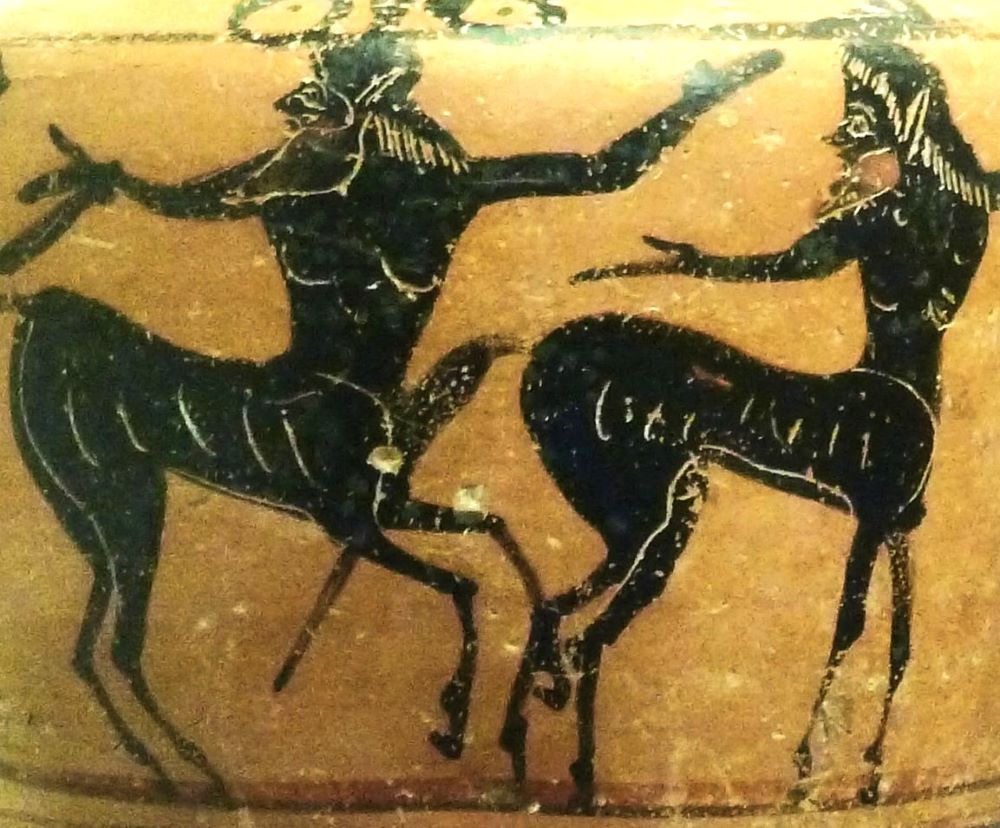
Chapter 2b1. Centaurus (Centaur). Two centaurs. Vase painting, 600-550 BC. Archeological Museum, Olympia, Greece. Photo by author.
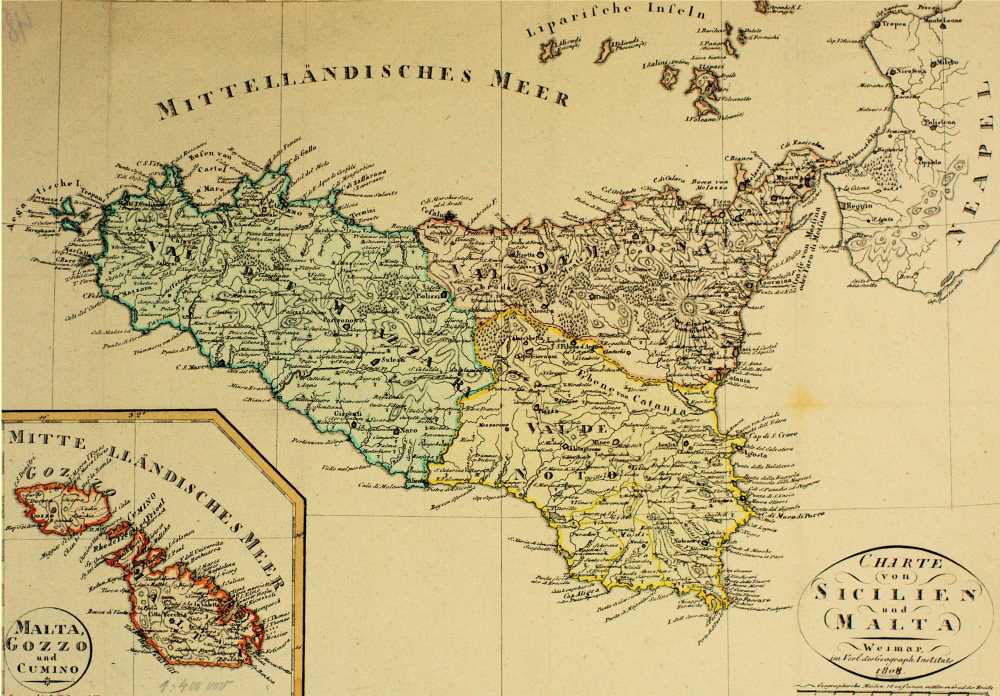
Chapter 2d1. Triangulum (Triangle) as Thrinacia (Sicily). Map of 1808.
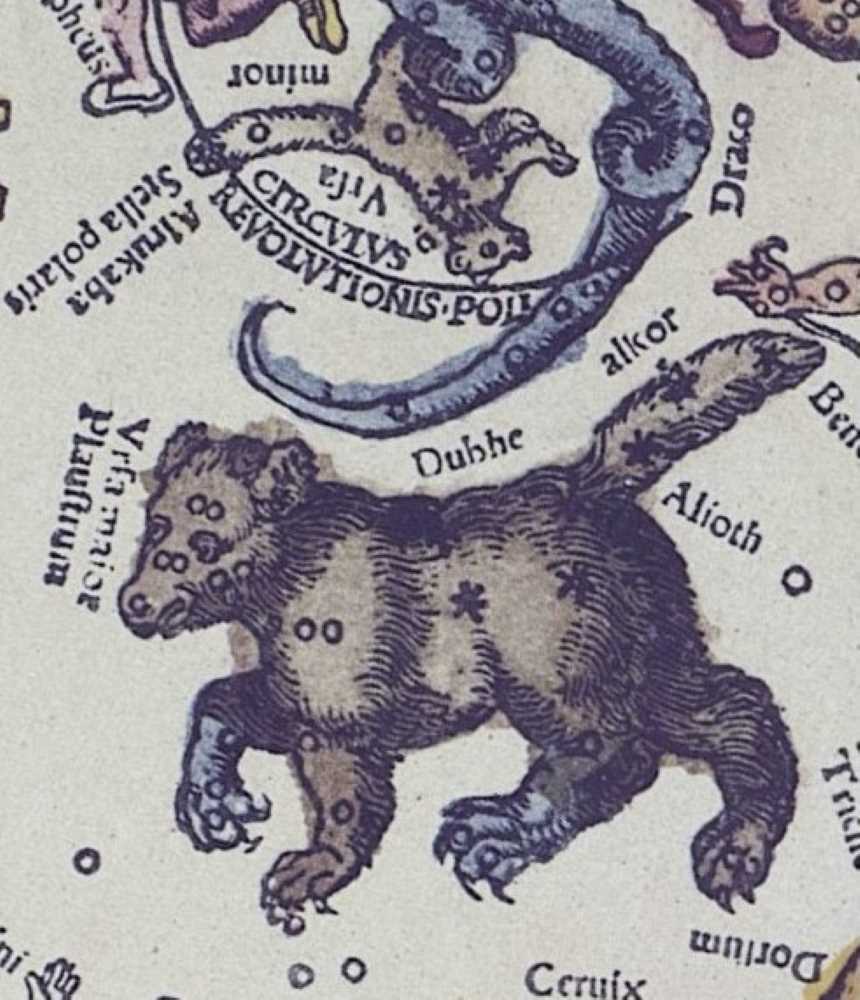
Chapter 3a1. Ursa Major (Bear) and Ursa Minor (Little Bear) constellations. Astronomicum Caesareum by Petrus Apianus, 1540. Rare Books, Texas Tech University.
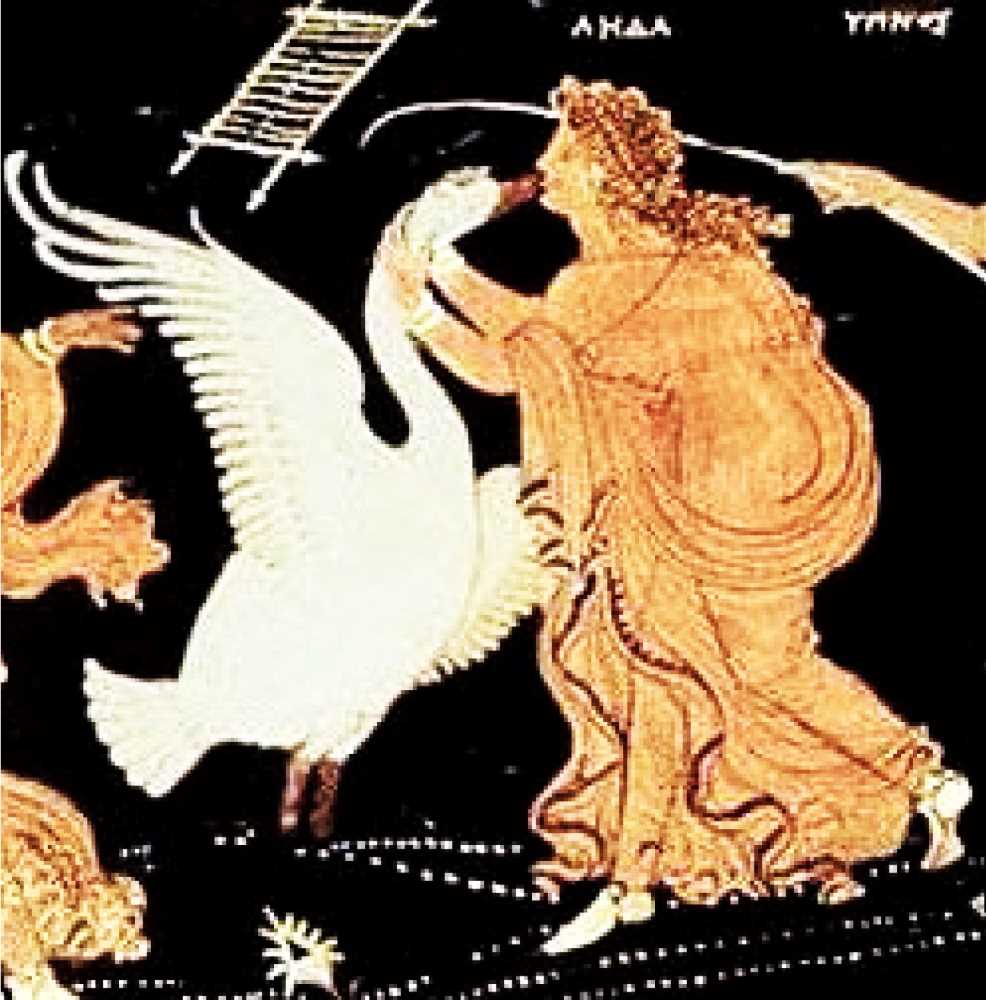
Chapter 3a2. Zeus disguised as a swan seducing Leda. Vase painting from Apulia c. 350-330 BC. Getty Museum, Los Angeles. Photo by author.
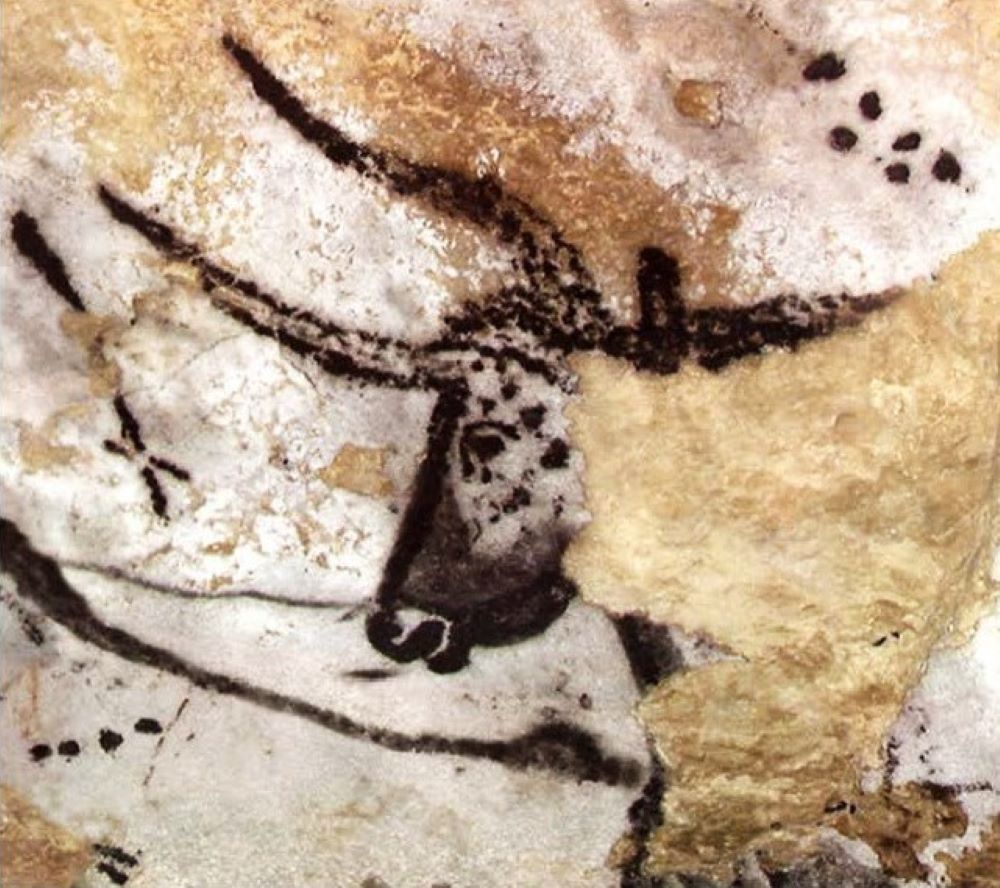
Chapter 3a3. Possible depiction of Taurus with the Hyades on the face and the Pleiades above. Prehistoric cave painting c. 15,000 BC. Lascaux Cave, France.
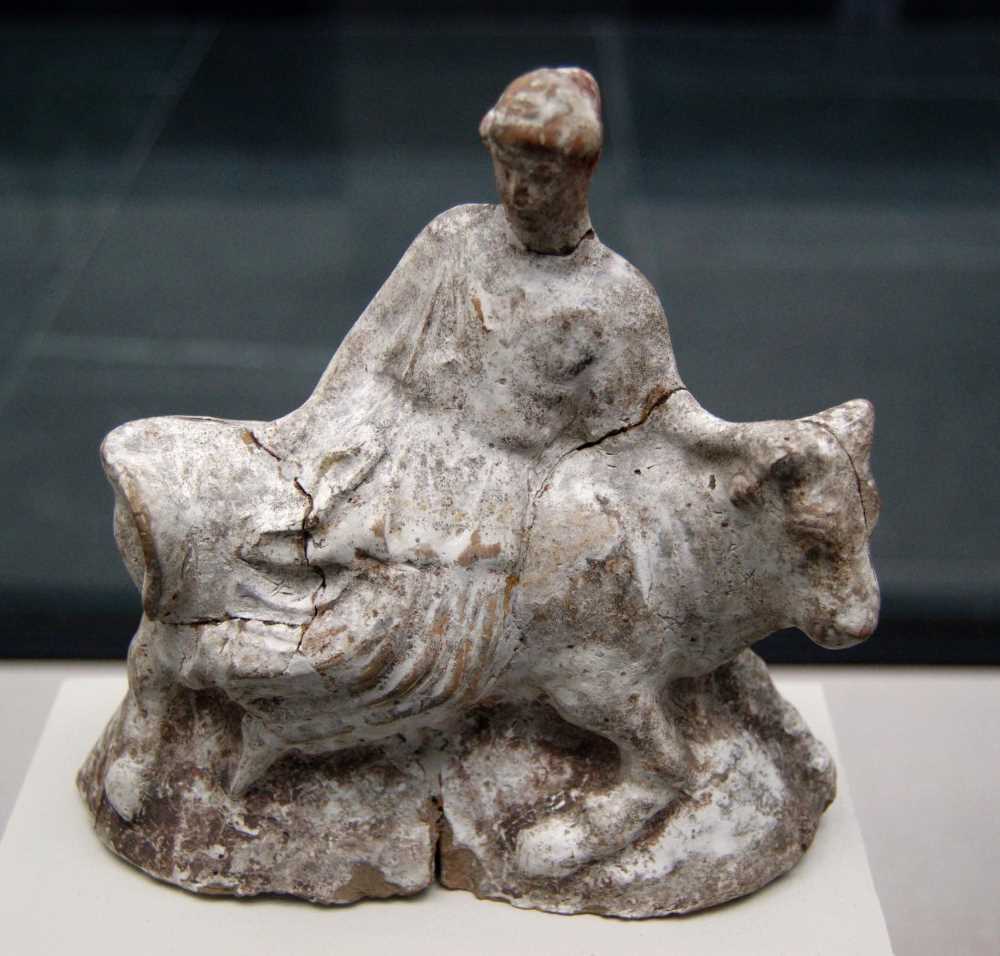
Chapter 3a4. Zeus disguised as a bull seducing Europa. Statuette, 480-460 BC. Staatliche Antikensammlungen und Glyptothek, Munich.
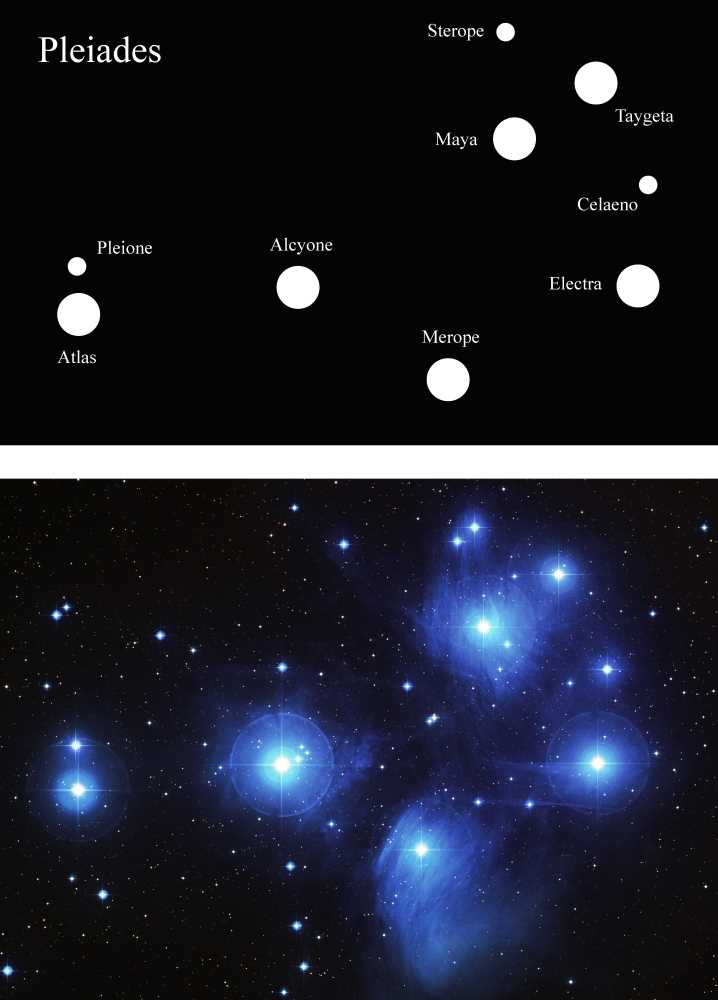
Chapter 3a5. The Pleiades asterism. Photograph by NASA, USA.
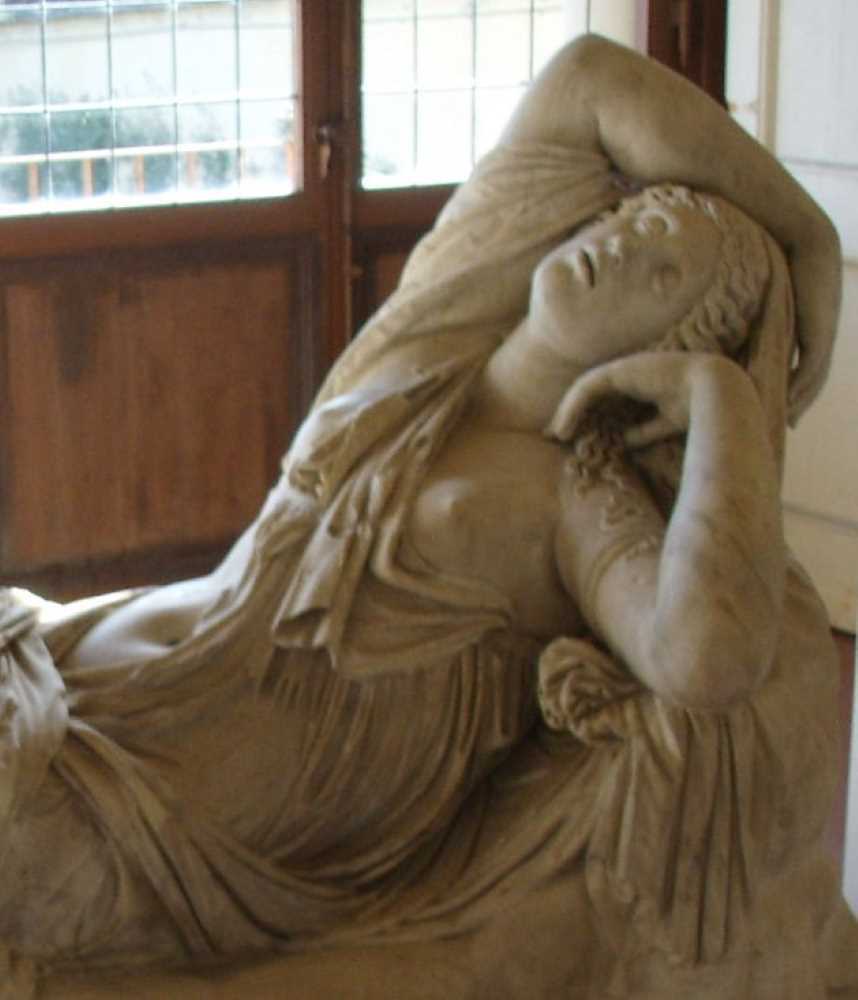
Chapter 3a6. Sleeping Ariadne. Roman sculpture c. second century AD, copied from a Greek original. Villa Corsini, Florence.
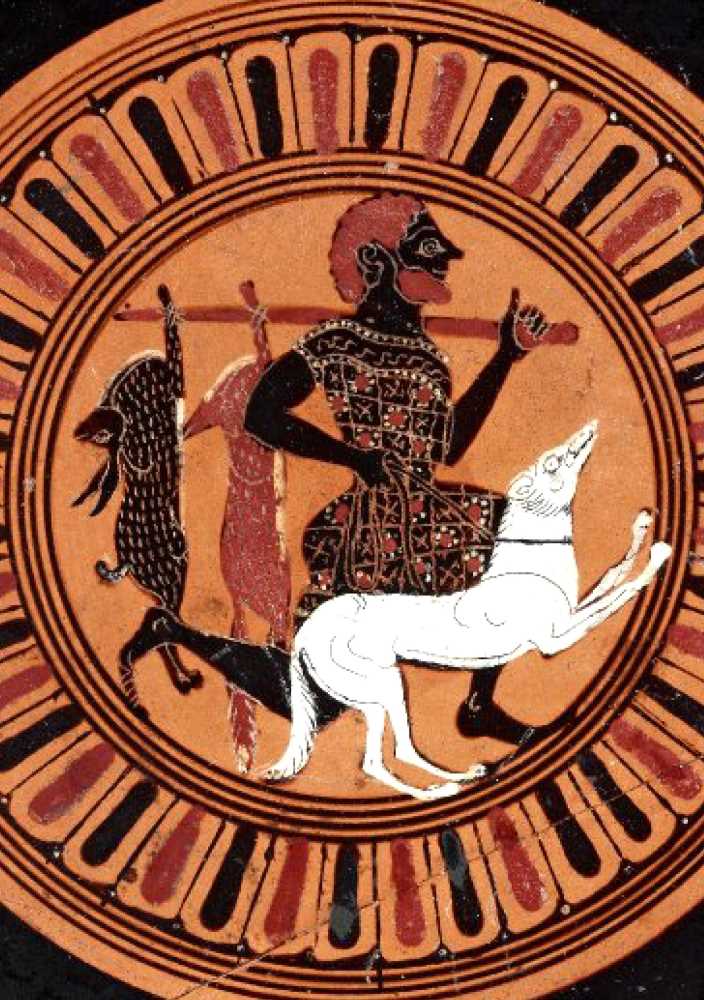
Chapter 4a1. Orion. Hunter with dog, hare, and fox. Pottery painting c. 550 BC. British Museum, London. Photo by author.
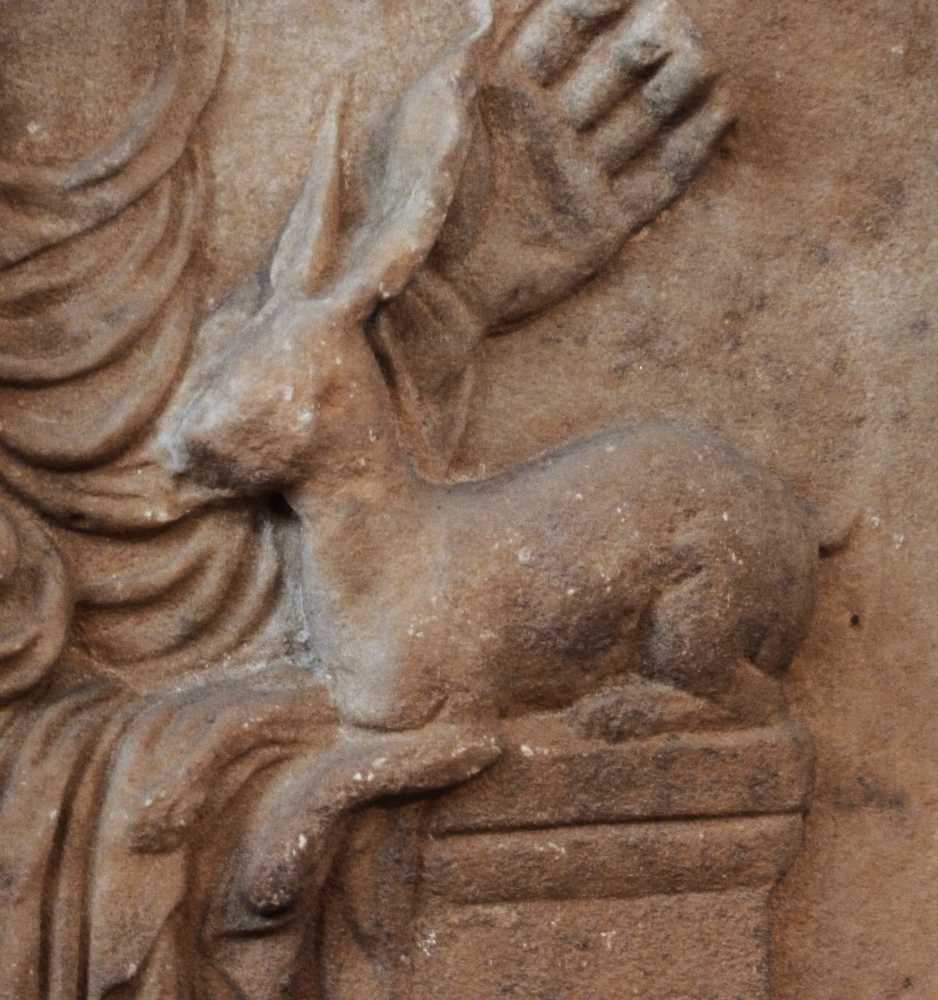
Chapter 4b1. Lepus (Hare). Marble sculpture, fifth to fourth century BC. National Archeological Museum, Athens. Photo by author.
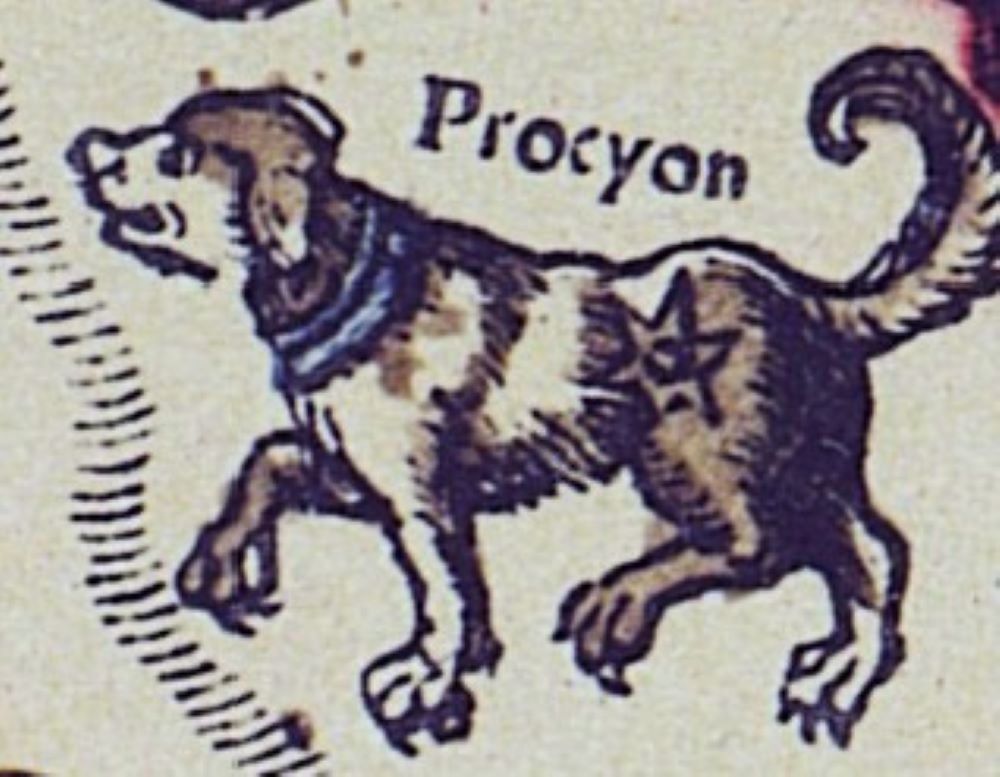
Chapter 4b2. Canis Minor (Herald of the Dog). Astronomicum Caesareum by Petrus Apianus, 1540. Rare Books, Texas Tech University.
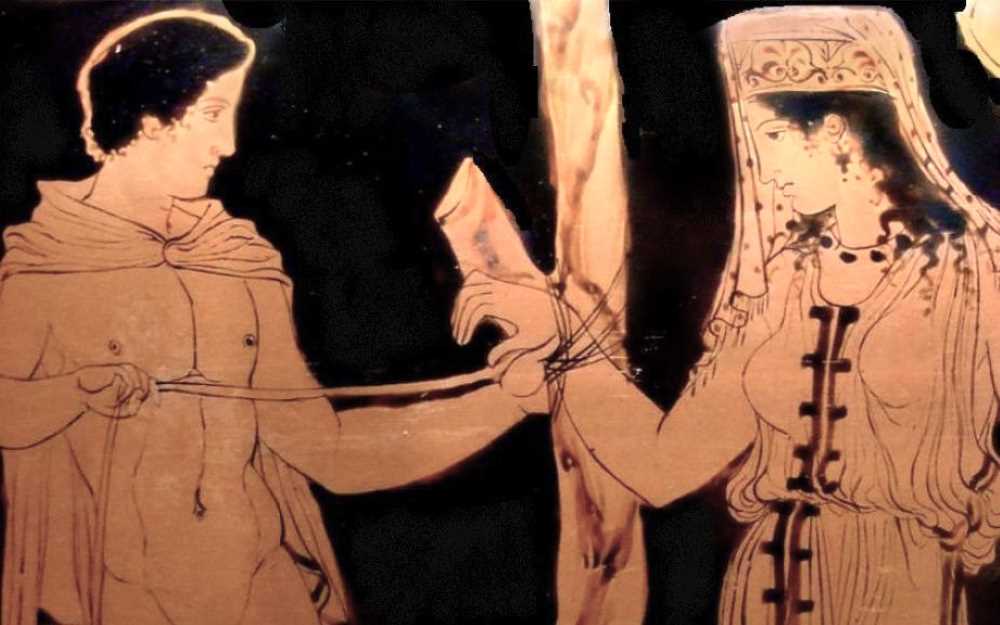
Chapter 5a1. Perseus and Andromeda. Vase painting c. fourth century BC. Getty Museum, Los Angeles.
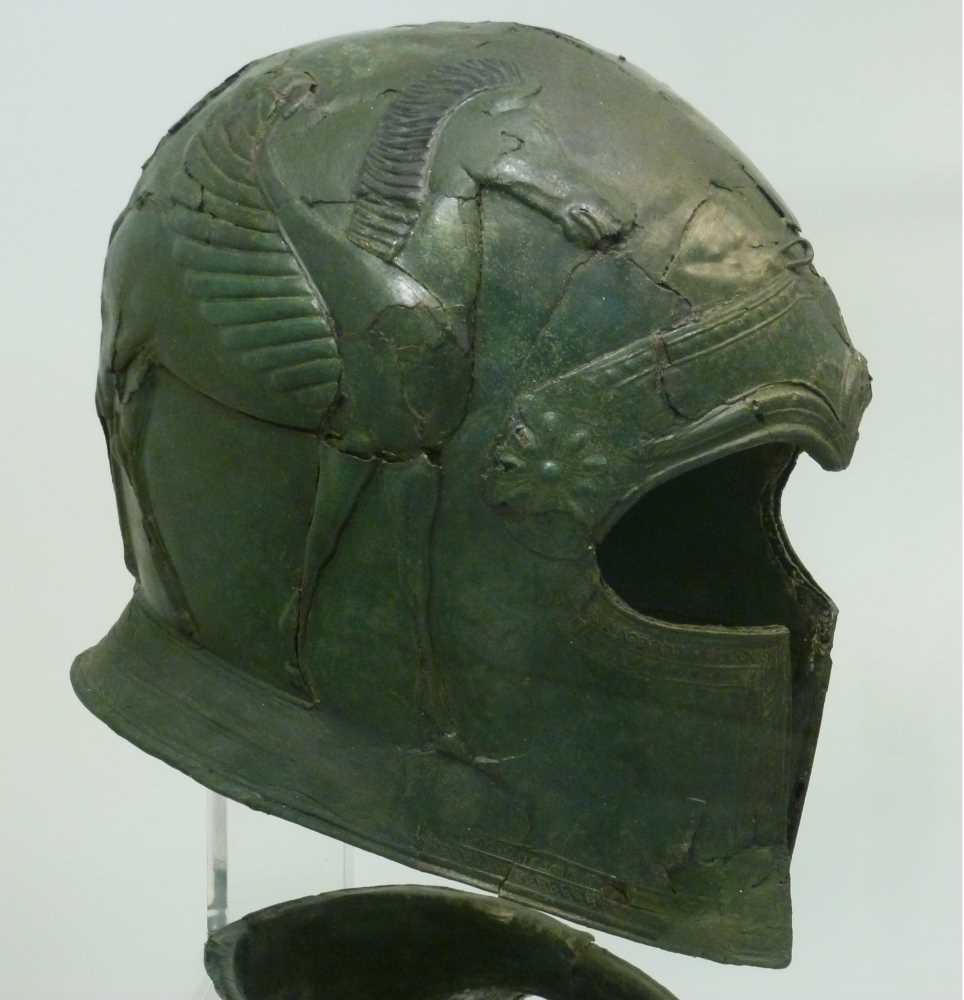
Chapter 5a2. Pegasus (Horse). Bronze helmet, seventh century BC. Archeological Museum, Iraklio, Crete. Photo by author.
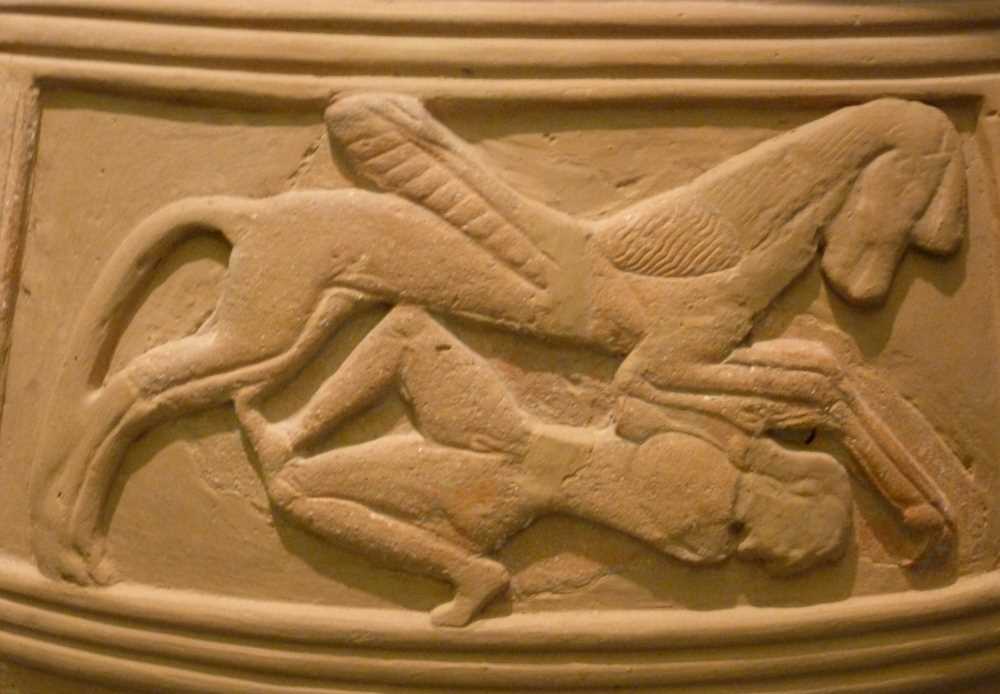
Chapter 5a3. Pegasus (Horse). Bellerophon falling through the sky. Pottery relief, seventh to sixth century BC. Archeological Museum, Iraklio, Crete. Photo by author.
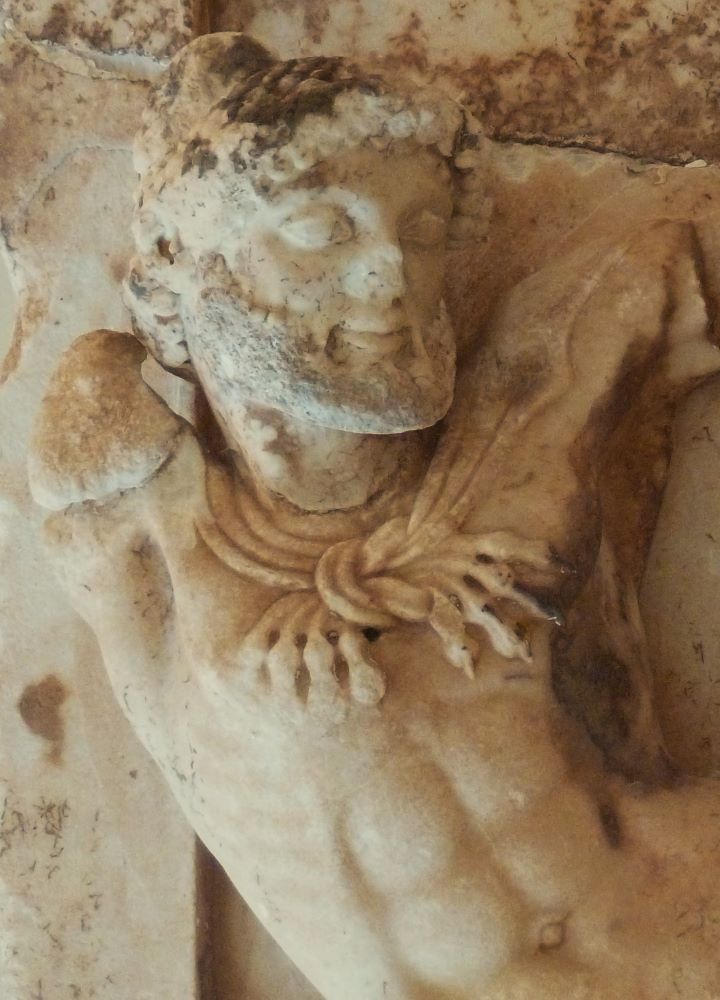
Chapter 5d1. Hercules with Nemean Lionskin. Marble sculpture, sixth century BC. Archeological Museum, Delphi, Greece. Photo by author.
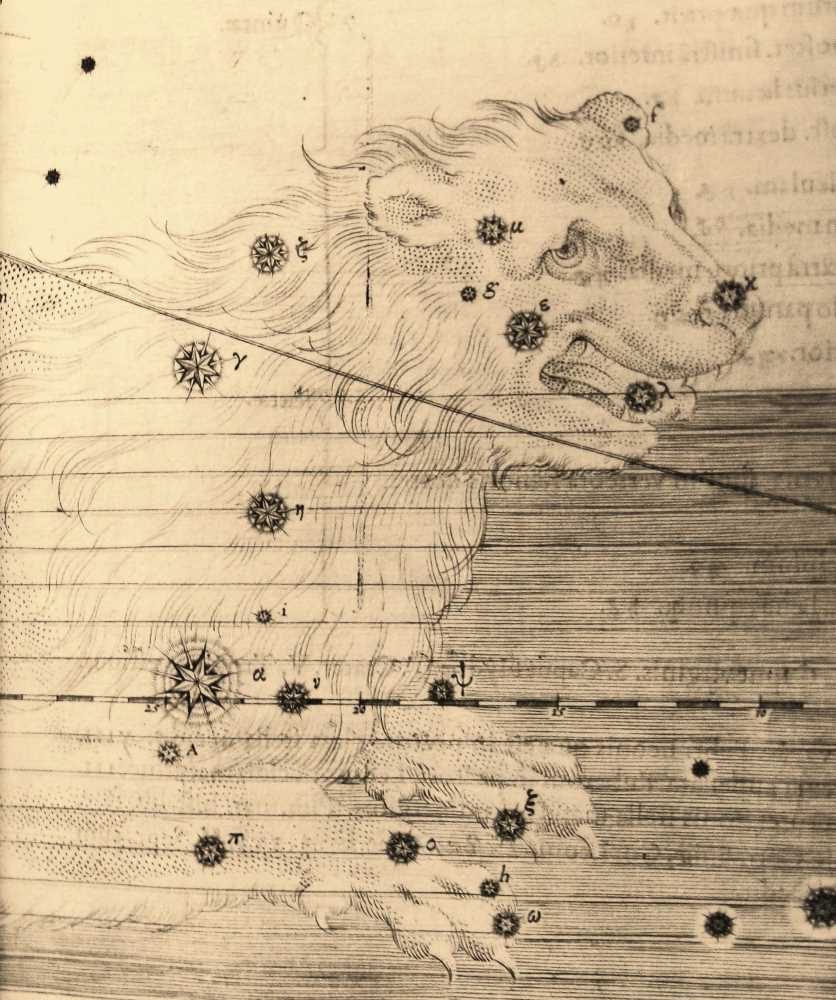
Chapter 5d2. Leo (Lion). Uranometria by Johann Bayer, 1603. Museum of History and Science Library, Oxford University. Photo by author.
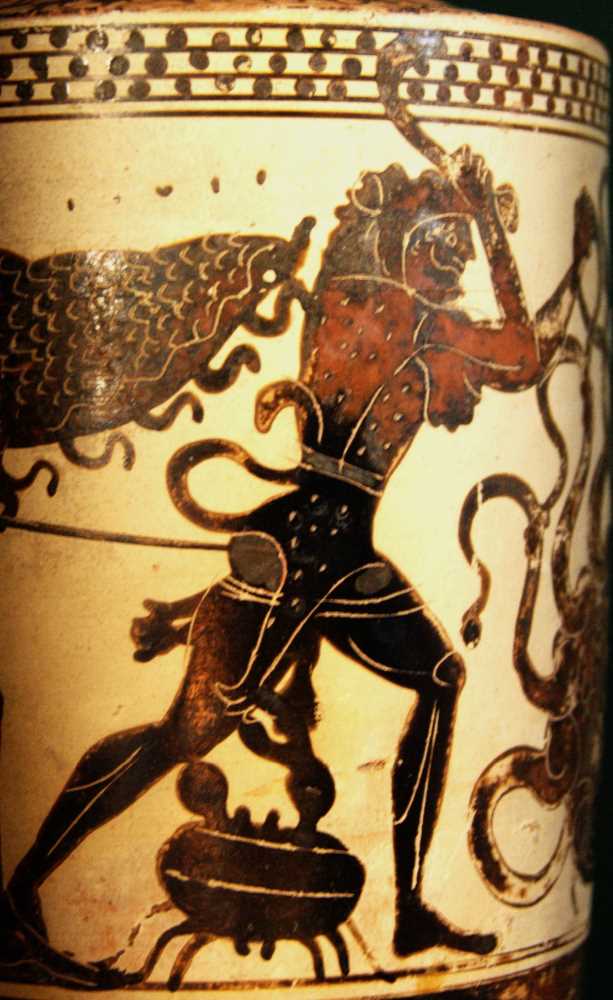
Chapter 5d3. Cancer (Crab) attacking Hercules as he fights Hydra. Vase painting c. 500-475 BC. Musee de Louvre, Paris. Photo by author.
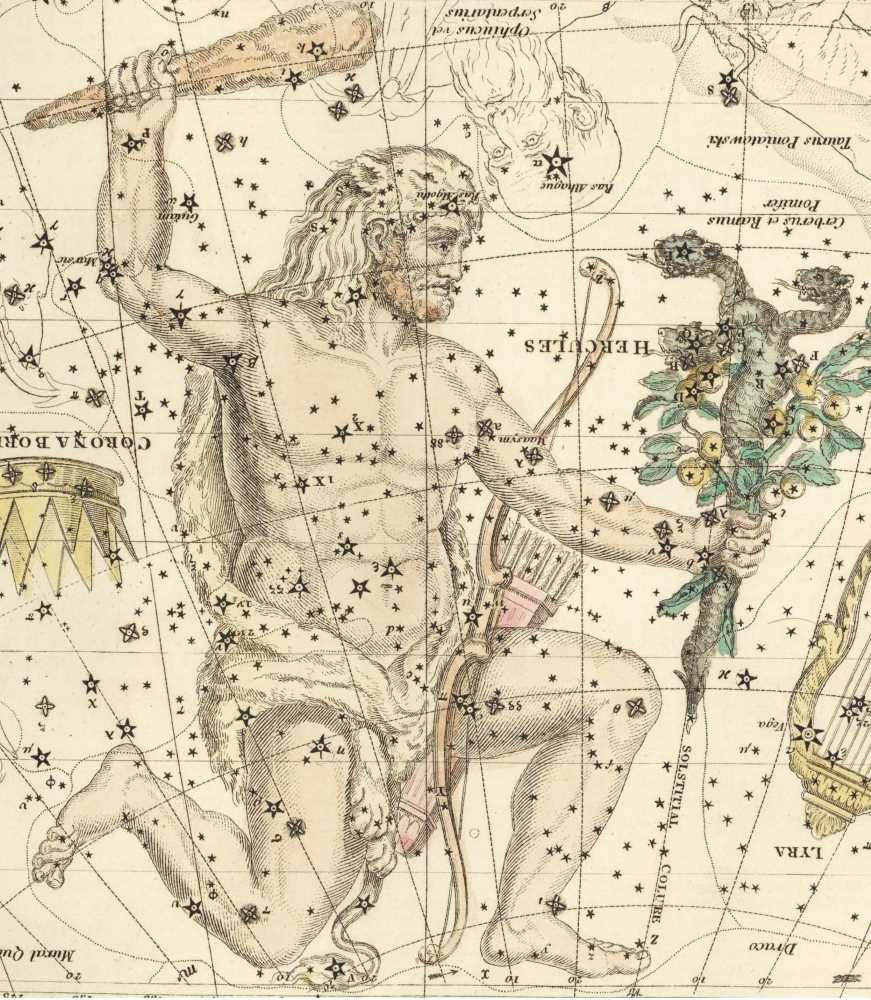
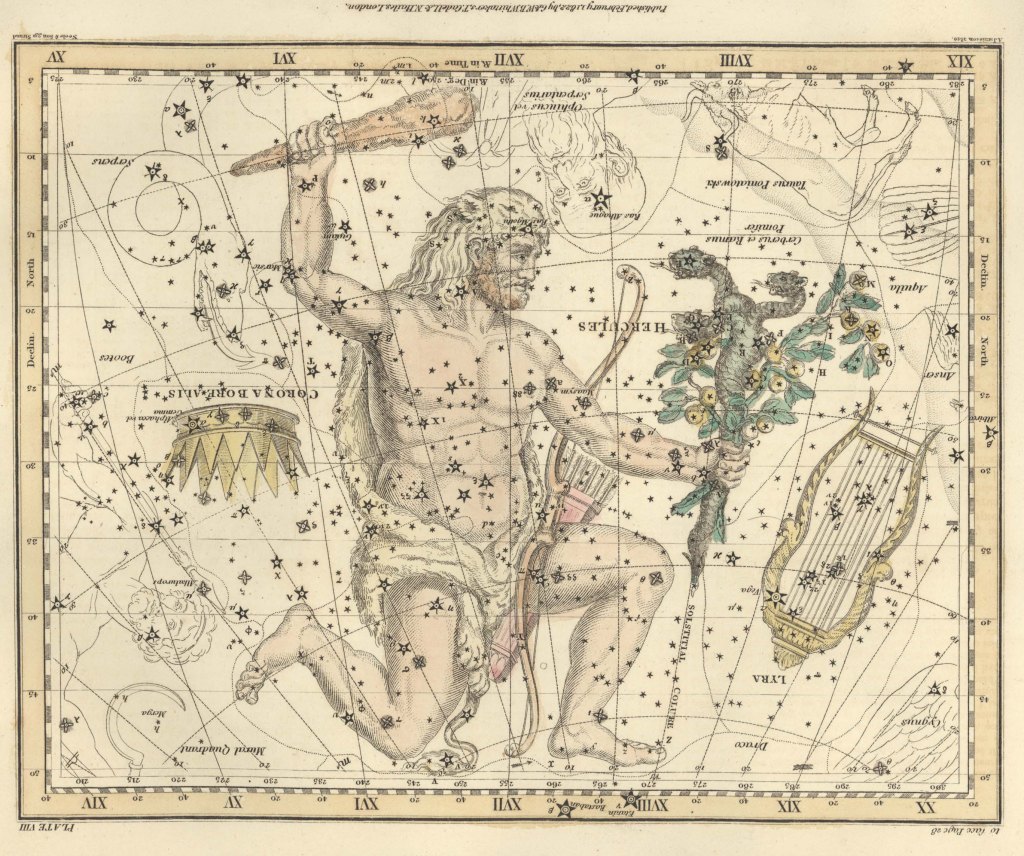
Chapter 5d4. Hercules (Kneeler). Celestial Atlas by Alexander Jamieson, 1822.
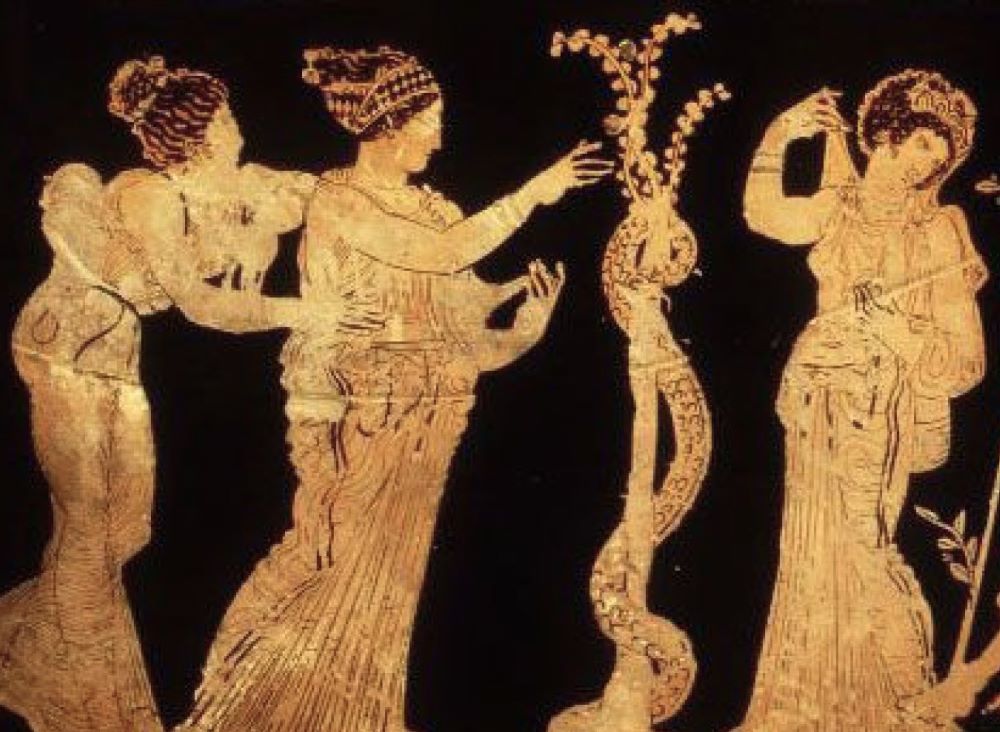
Chapter 5d5. Draco (Dragon) and the Hesperides. Vase painting, 420-410 BC. British Museum, London.
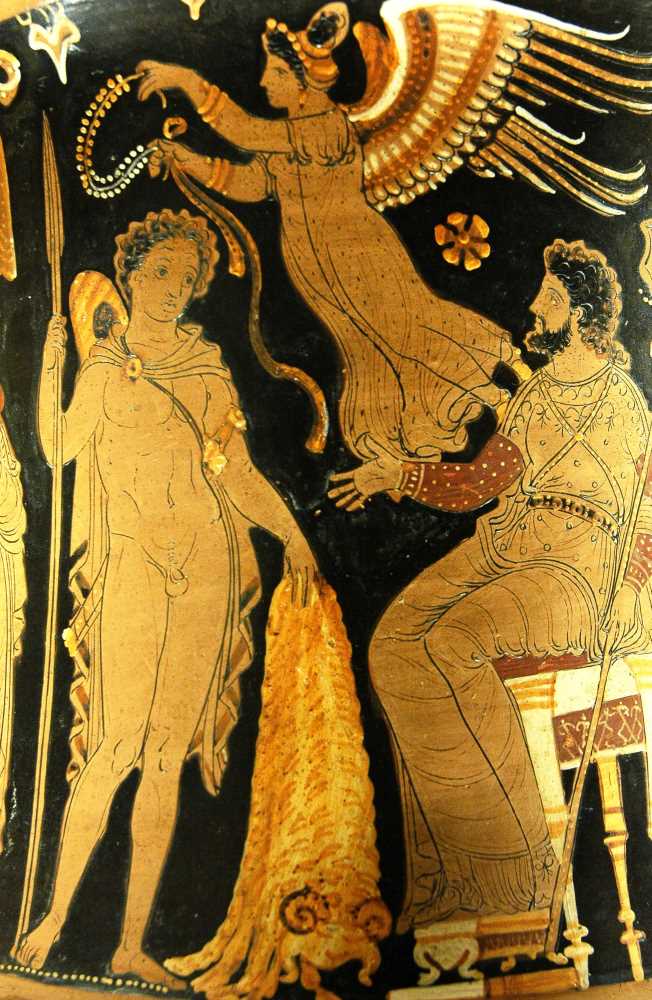
Chapter 6c1. The Golden Fleece. Vase painting c. 340-320 BC. Musee de Louvre, Paris.
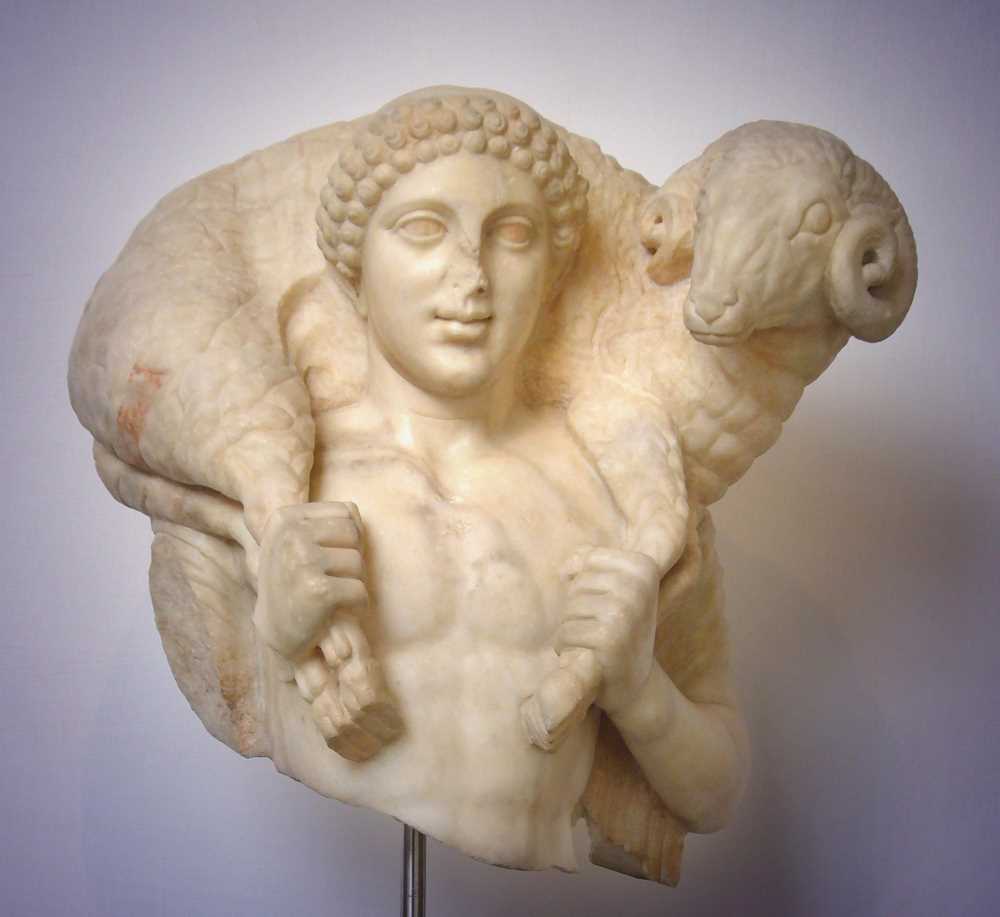
Chapter 6c2. Hermes Kriophoros (Ram-bearer). Marble copy of a Greek original from the fifth century BC. Museo Barraco, Rome.

Chapter 6d1. Ancient Greek ship design, with an oversized Dionysus aboard. Vase painting c. 540 BC. Staatliche Antikensammlungen und Glyptothek, Munich.

Chapter 6h1. Athena with a guardian serpent. Reproduction of original Athena Varvakeion colossal statue from the Parthenon, 438 BC. National Archeological Museum, Athens. Photo by author.
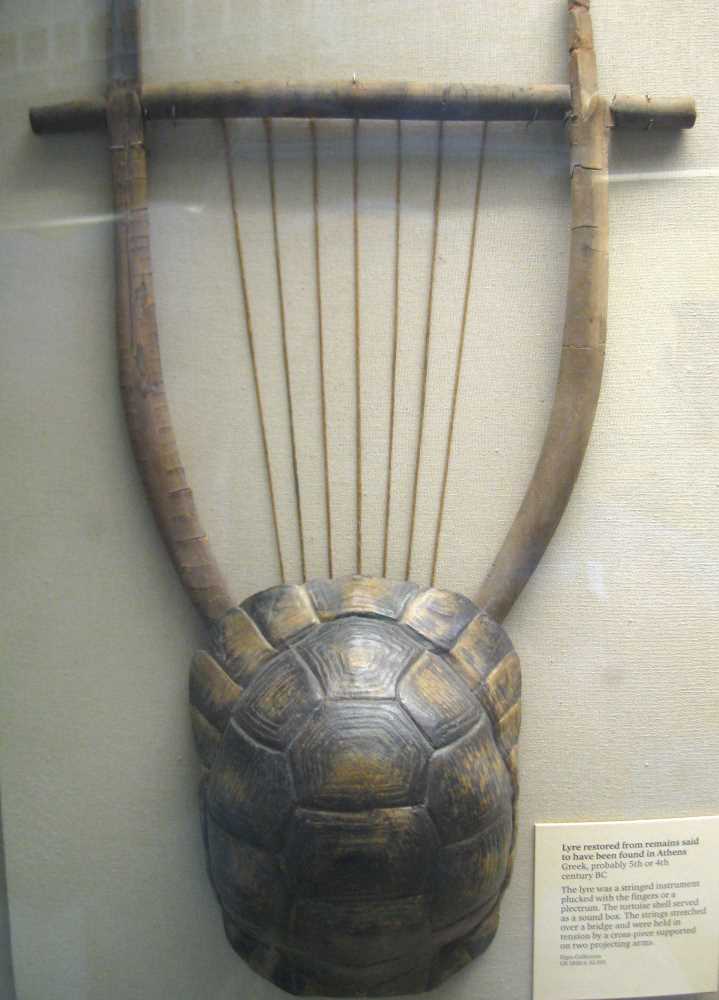
Chapter 6h2. Restored tortoise shell lyre, fifth to fourth century BC. British Museum, London. Photo by author.
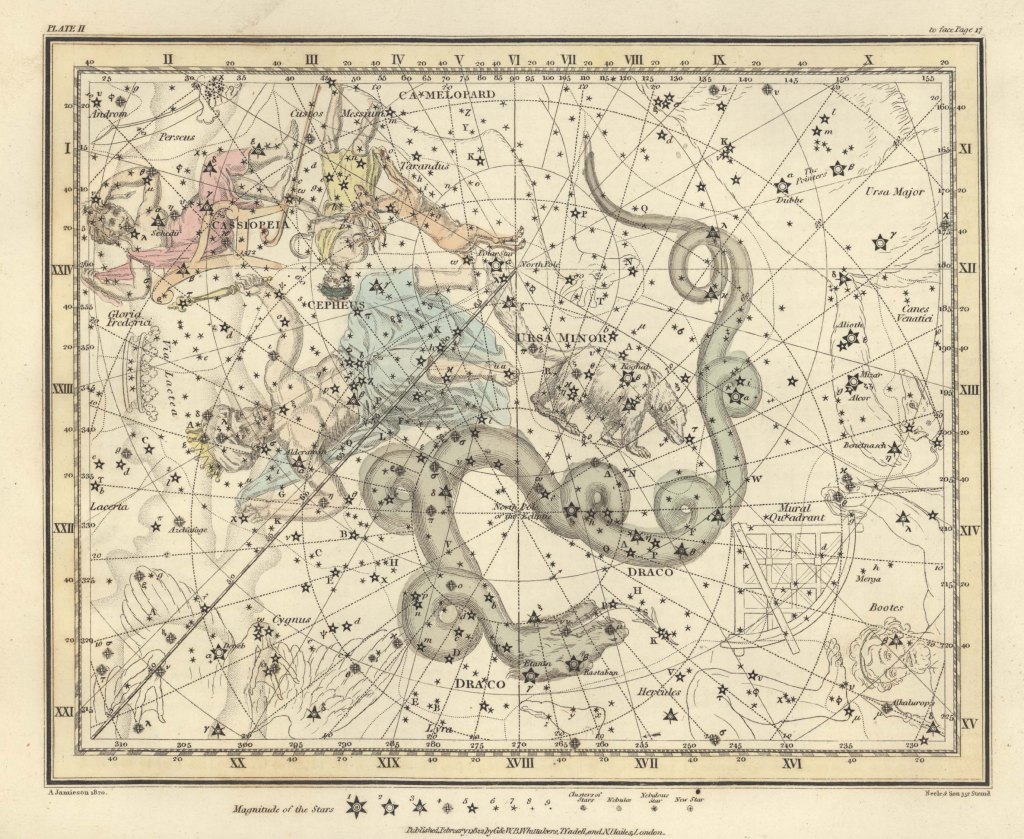
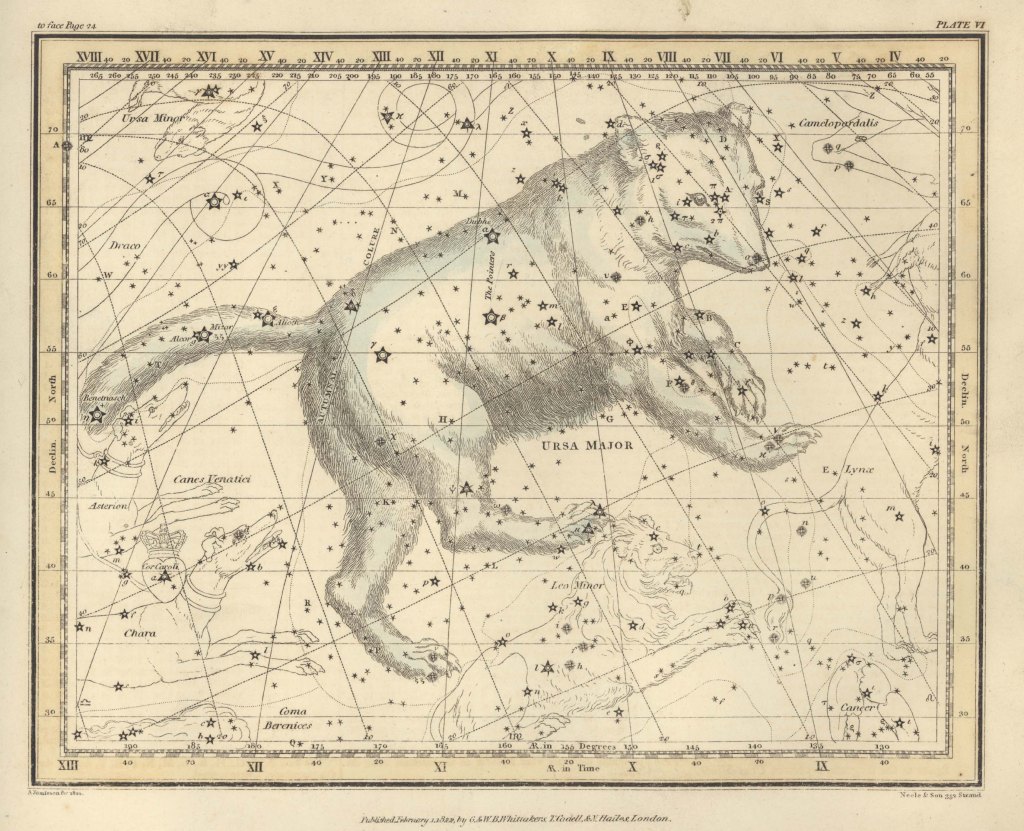
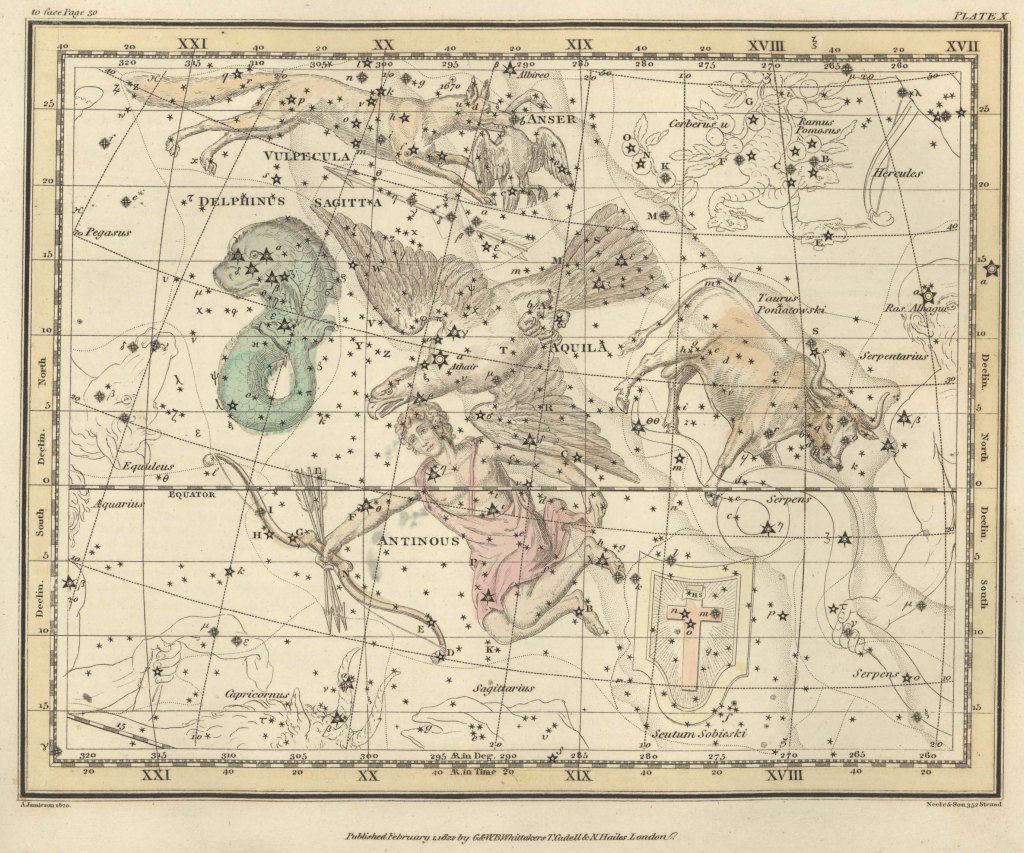
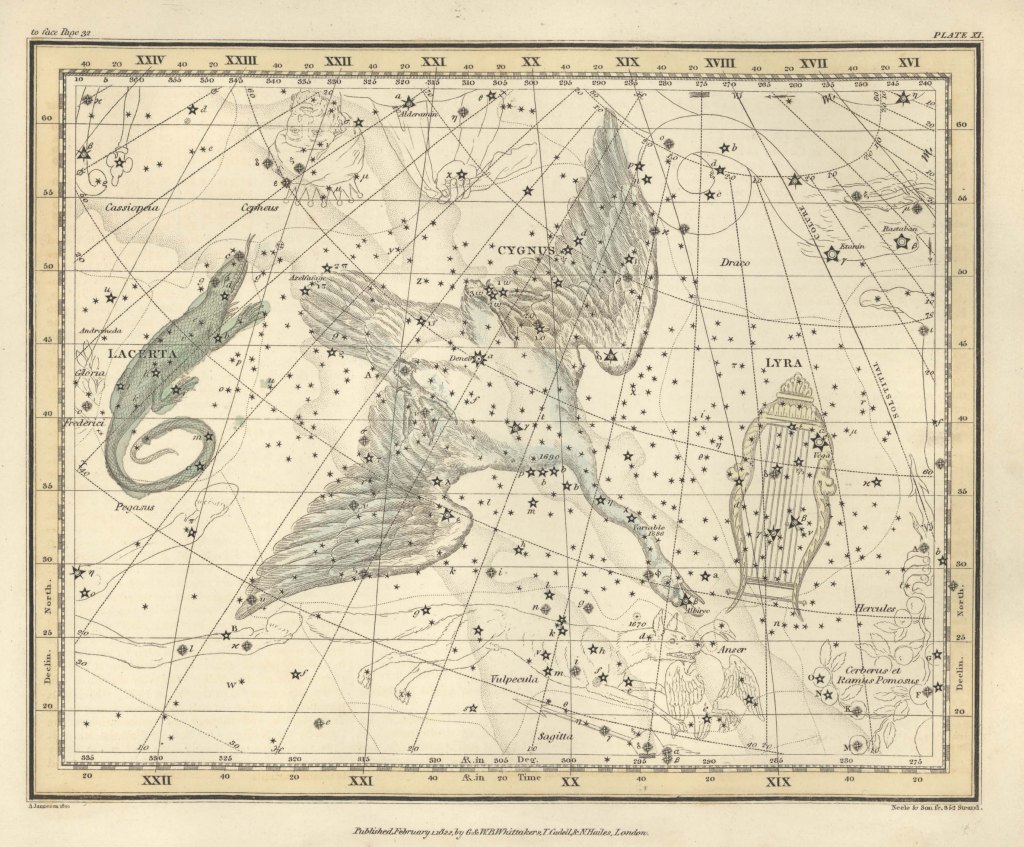
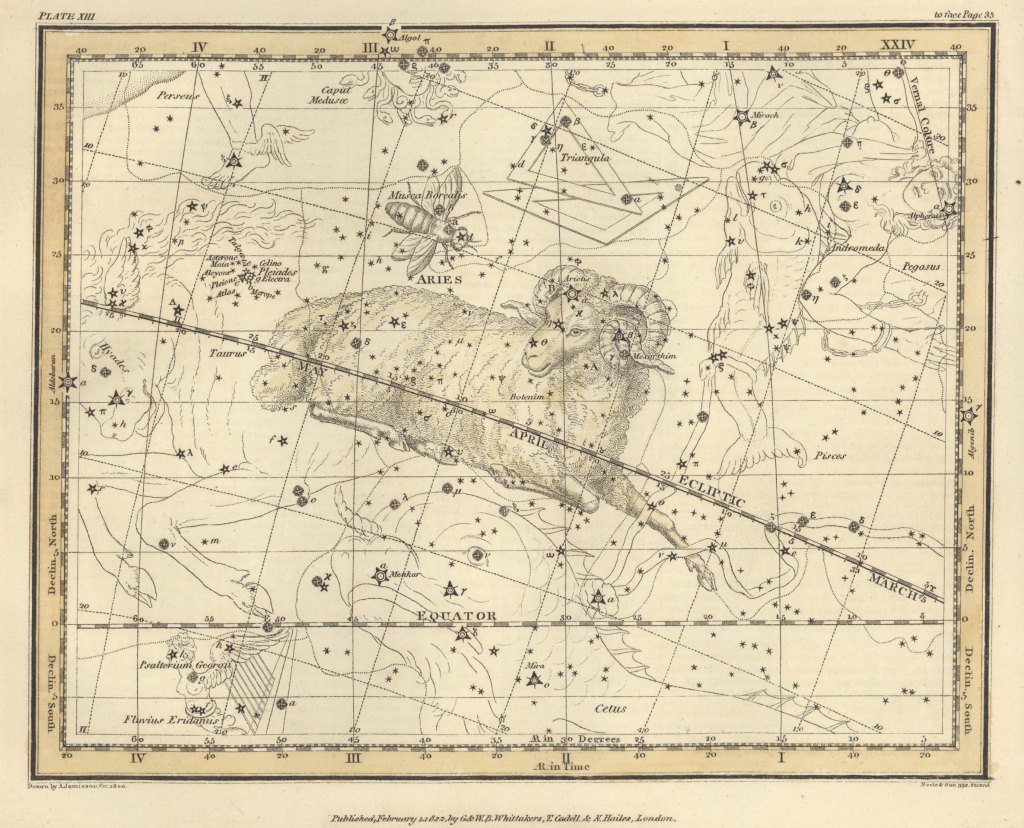
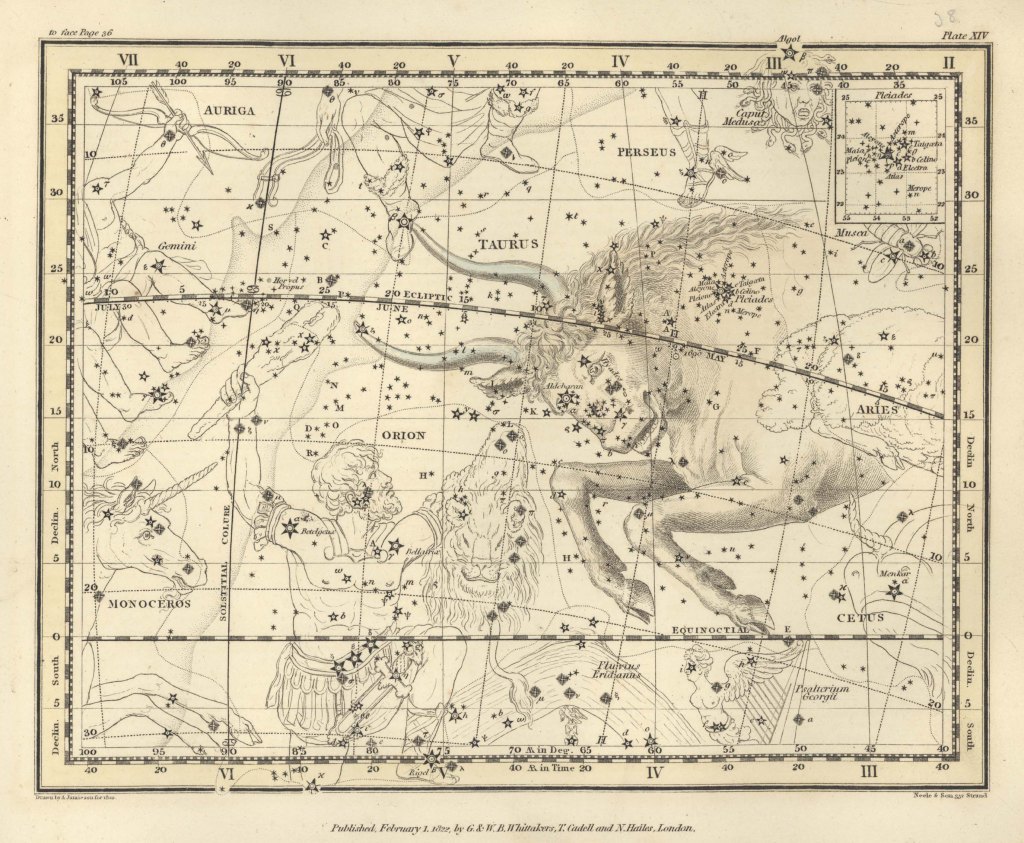
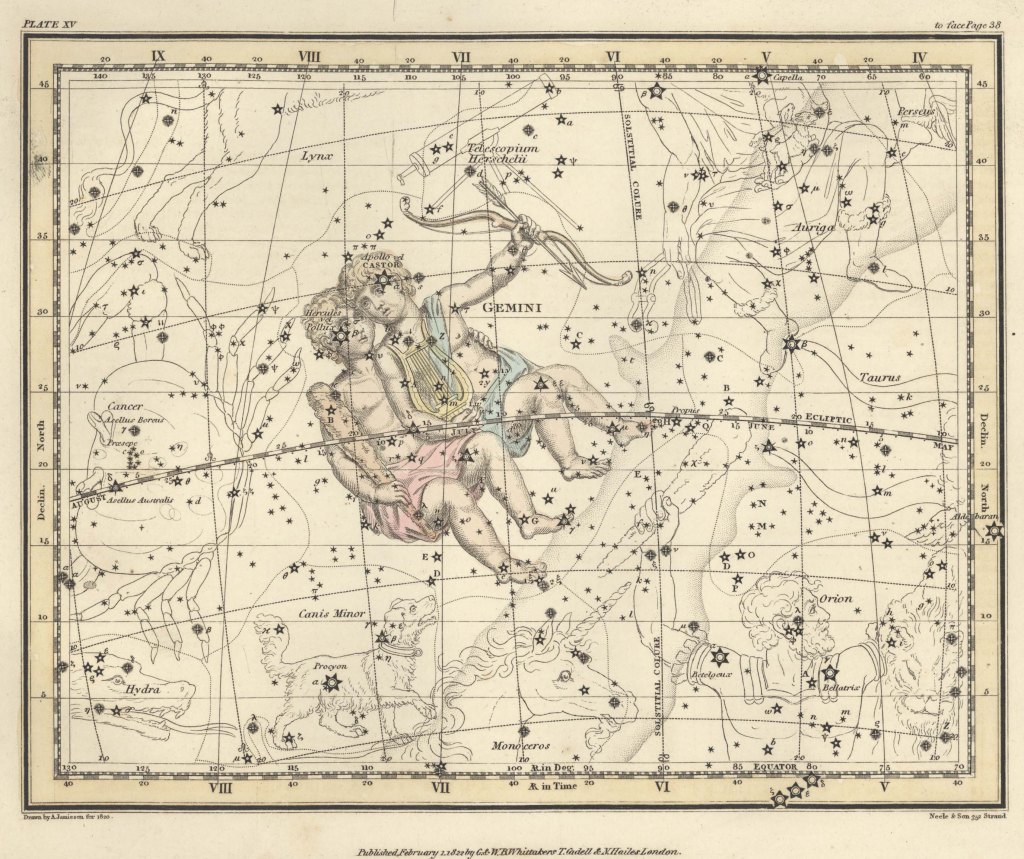
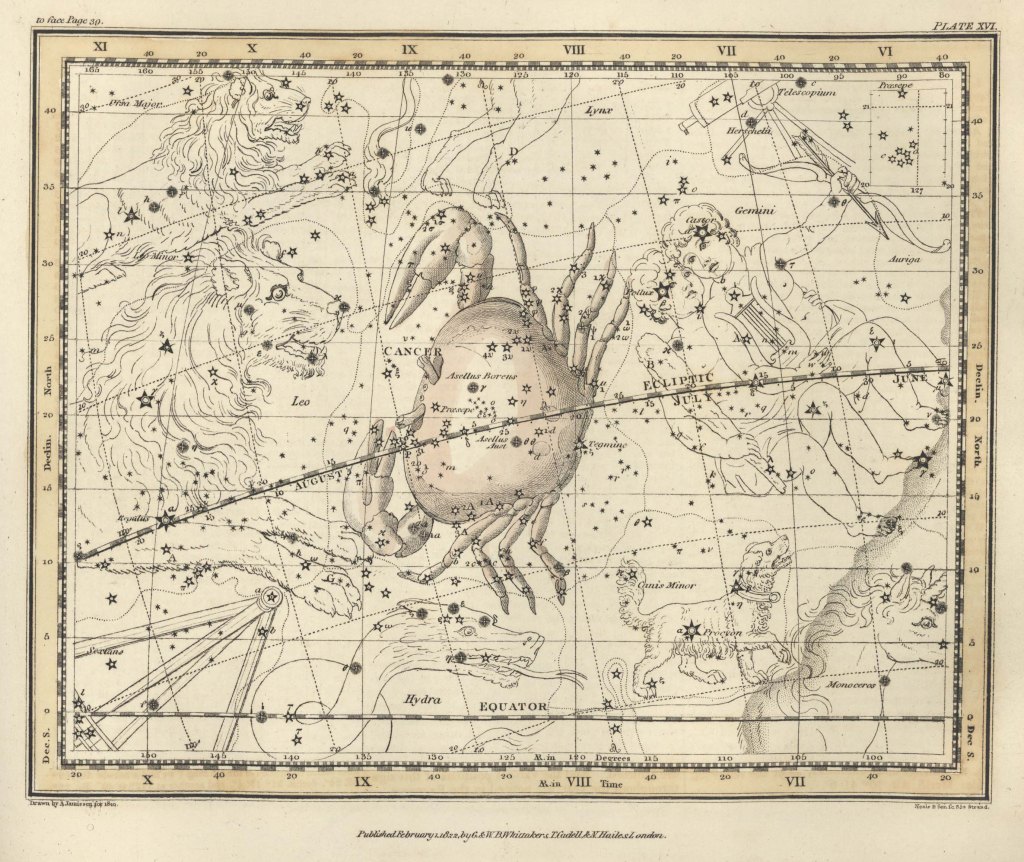
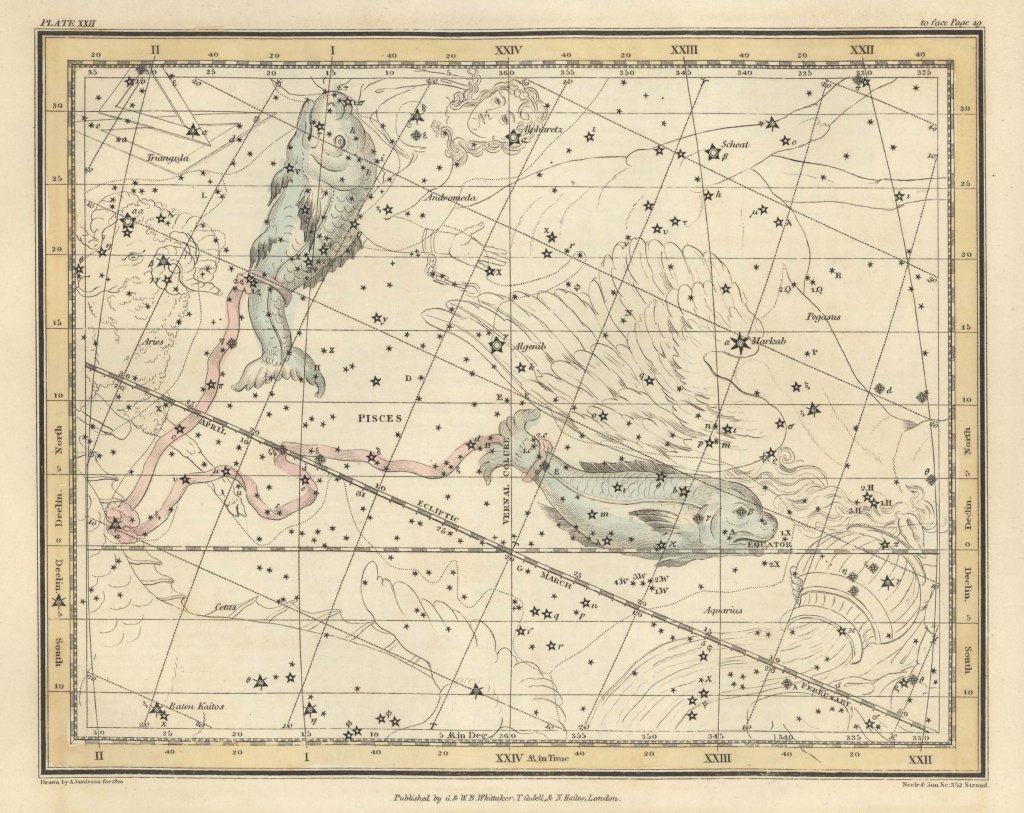
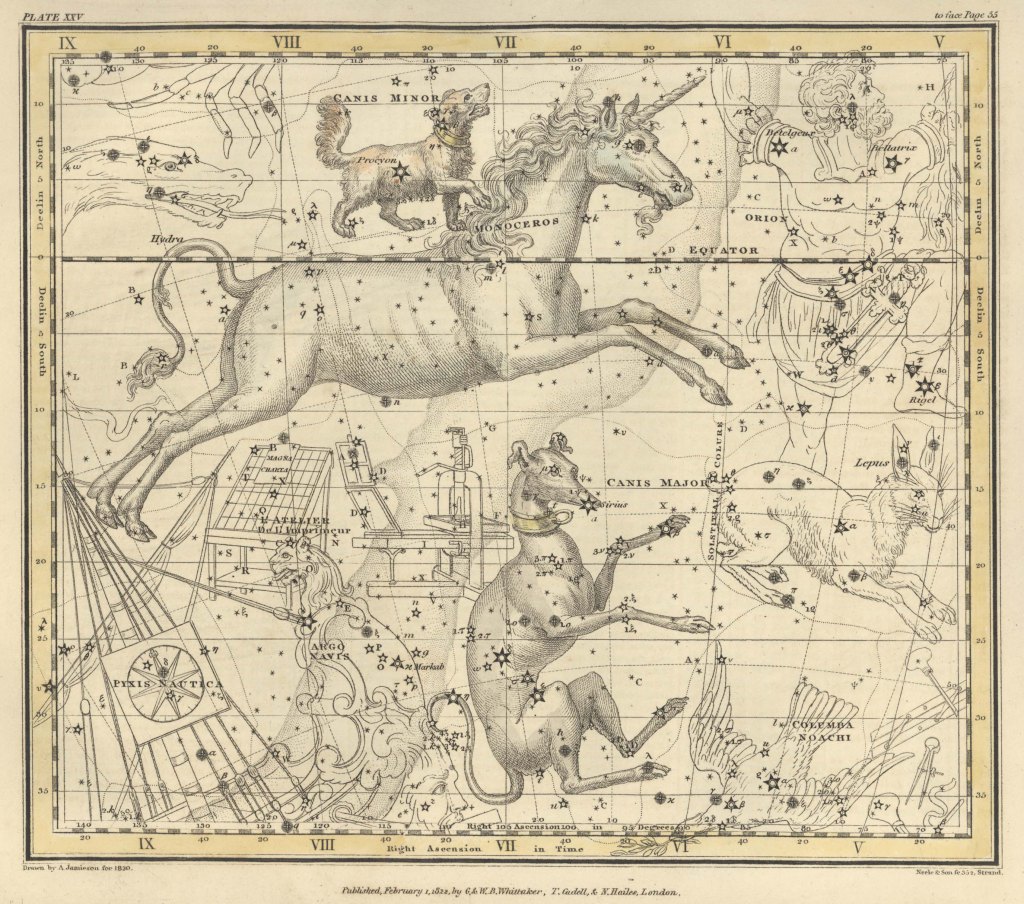
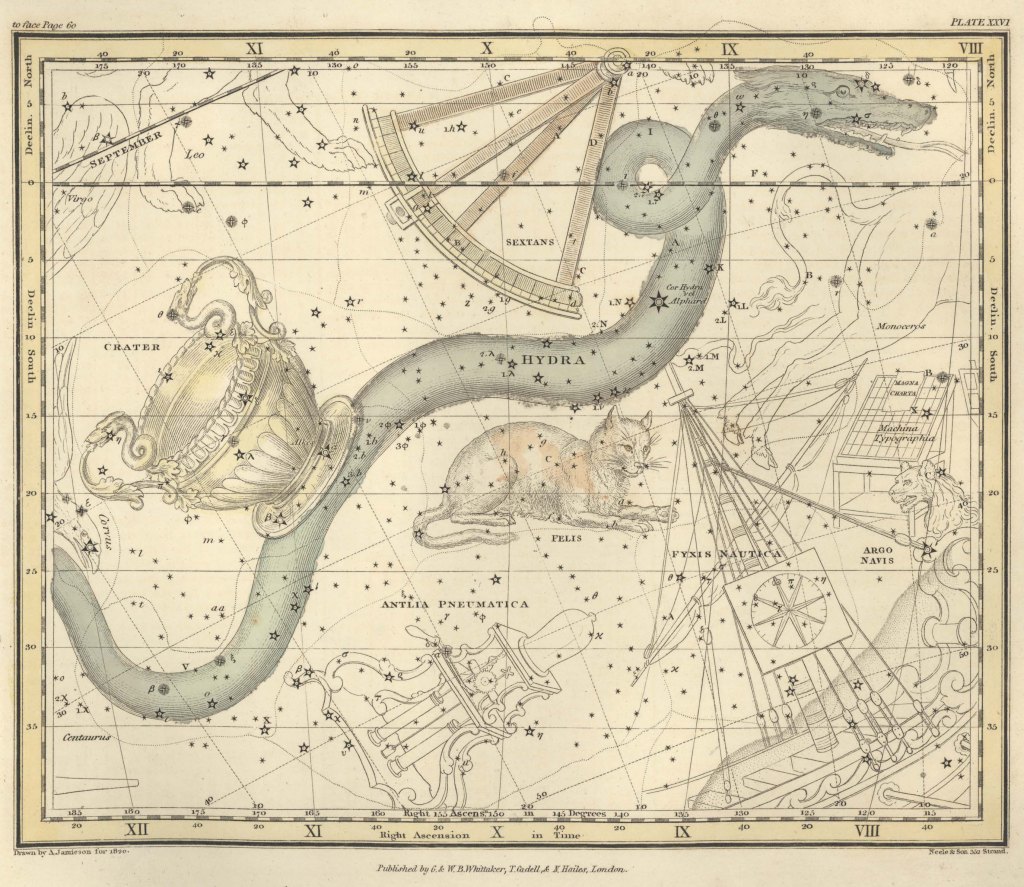
CELESTIAL ATLAS BY ALEXANDER JAMIESON, 1822.









 David Weston Marshall